
Volcanoes, Soil, and the Carbon Clock: What Costa Rica Can Teach the World About Enhanced Rock Weathering
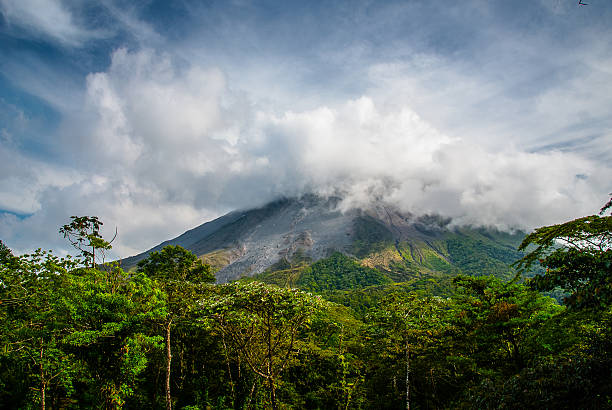
Arenal Volcano in Costa Rica.
For a country of five million people, Costa Rica punches far above its weight when it comes to environmental action. It reversed decades of deforestation before most countries acknowledged the problem. It runs on almost entirely renewable electricity and has pledged carbon neutrality since 2021. In addition, in what is the focus of this article, a 2024 study published in Science of the Total Environment suggests it may be offering the world something that could extend beyond its borders: a geological template for one of the most promising carbon removal strategies of our time.
The study, led by P.C. Ryan and colleagues at Middlebury College, takes Costa Rica as a case study for enhanced rock weathering (ERW), the practice of spreading powdered silicate rock onto agricultural land to accelerate the natural process by which minerals absorb CO₂. What makes Costa Rica an unusually compelling subject is its political willingness and its geology.
The ground beneath Costa Rica
Costa Rica sits on a volcanic arc where the Cocos tectonic plate dives beneath the Caribbean plate, feeding a chain of active volcanoes, Arenal, Barva, Miravalles, Rincón de la Vieja among them. The same geological forces that built this country’s dramatic topography also left it with vast, continuously replenished deposits of basaltic andesite: calcium- and magnesium-rich mafic rock that weathers readily and, in doing so, draws down atmospheric CO₂.
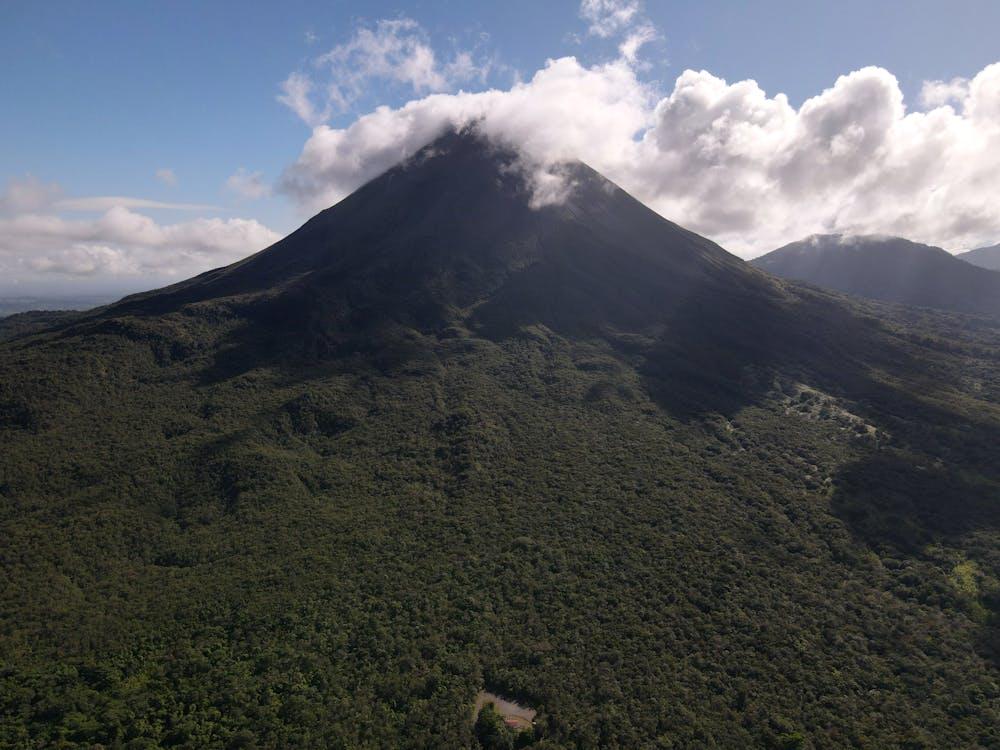
The underlying chemistry is one of Earth’s oldest climate regulators. When silicate minerals dissolve, driven by carbonic acid in rainwater and organic acids produced by plant roots and soil microbes, CO₂ is converted into dissolved bicarbonate, which travels through drainage into groundwater and eventually the ocean, where it can remain stored for geological timescales, up to thousands of years. ERW proposes to accelerate the process by grinding reactive rocks and bringing the dust to agricultural fields where conditions such as heat and biological activity are already optimal. In the humid tropics, those conditions are unmatched anywhere on Earth.
Ryan et al. tested powders from two Costa Rican volcanoes, Arenal and Barva, alongside a Hawaiian basalt standard (BHVO-1) and a coastal sediment sample from the Osa Peninsula. The experiment ran for 14 days under conditions designed to simulate a tropical Ultisol (red clay soil), with dilute oxalic acid in carbonated water applied seven times onto lateritic subsoil. From those controlled conditions, the team extracted experimental weathering rates and a set of findings with implications for how ERW should be scaled globally.
What the data shows and what drives the differences
For Costa Rican basaltic andesites applied at 50 tonnes per hectare, the experiment yielded carbon dioxide removal (CDR) rates of 2.4 to 4.5 tonnes of CO₂ per hectare per year, enough, as the study’s spatial analysis later shows, to offset roughly a quarter to nearly half of Costa Rica’s annual emissions if applied across half the country’s lateritic agricultural soils. The Hawaiian basalt performed three to five times higher, at 11.9 t CO₂ ha⁻¹ yr⁻¹ under identical conditions. Understanding why those numbers diverge is as important as the numbers themselves.
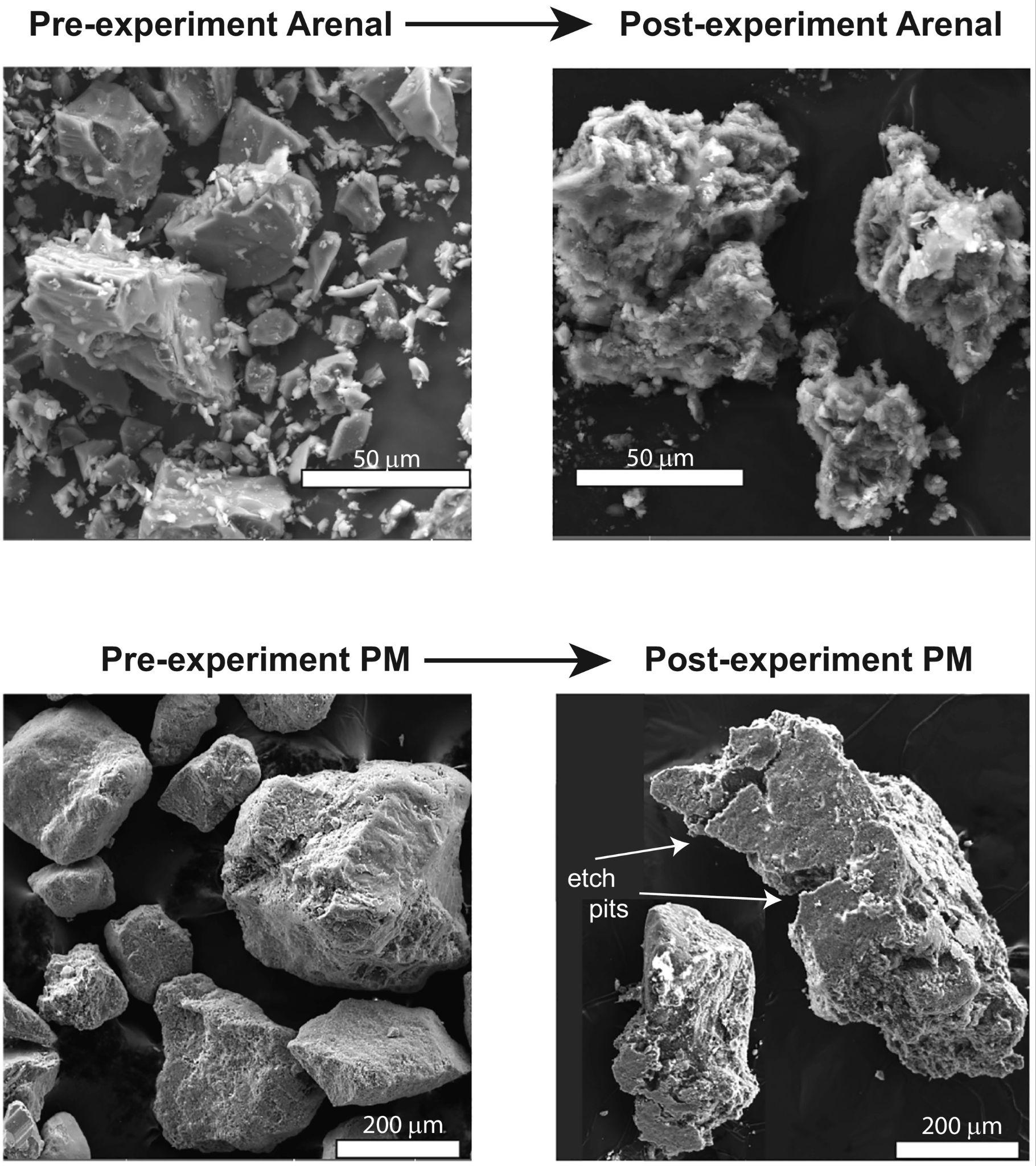
Two variables account for most of the difference. The first is mineralogical composition. Hawaiian ocean island basalt contains a greater abundance of magnesium-rich pyroxene and olivine, which weather rapidly and release more carbon-capturing products than the intermediate arc rocks from Costa Rica. The second variable is particle size: Hawaiian BHVO-1 had a mean particle diameter less than one third the size of the smallest Costa Rican mean basalt particles from Barva (14.1 μm versus 47.2 μm) and was roughly an order of magnitude finer than Arenal and the Osa sediment, giving it a faster dissolution rate and substantially greater surface area to react with carbon in the atmosphere.
These experimental findings gain additional credibility from an independent, field-derived source. On Costa Rica’s Osa Peninsula, soils formed by natural weathering of andesitic beach sediments over five thousand years allowed the researchers to calculate how much CO₂ had been consumed by weathering across that timespan. Scaled to a 50 tonnes per hectare application rate, this geological record yields an estimated CDR of 1.7 tonnes per hectare per year. The researchers note that this figure is likely the minimum we could expect from future applications, because the soil formation tracks weathering to a depth of one metre, which can slow some parts of the weathering process, while an actual ERW application involves a layer of just one millimetre of powder at the soil surface.
Researchers discovered that this formation shows a pace of mineral consumption that simply does not occur in temperate climates. Volcanic glass disappears within the first thousand years, pyroxene within two thousand, and plagioclase within three. This explains why the tropics are a categorically different weathering environment, offering more opportunities than less tropical regions.
The Costa Rica scenario
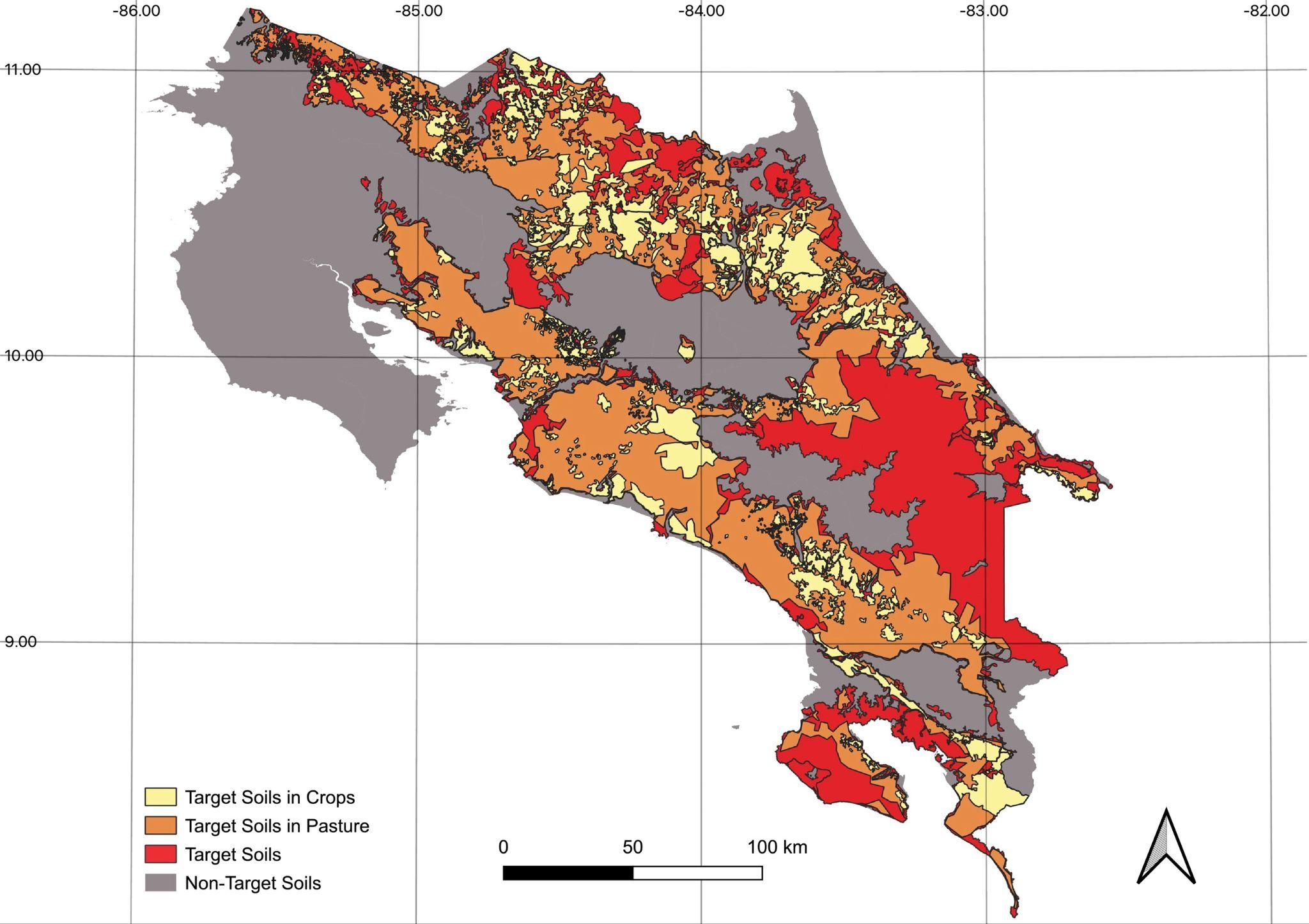
With CDR rates established, the study turns to geography. Using data from the University of Costa Rica and national geographic institutes, Ryan et al. identified 2.29 million hectares of agricultural soils with relevant characteristics: kaolinitic, primarily Ultisols under crops and productive pasture, with a mean annual temperature above 24°C and annual precipitation above 2,500 mm. These deeply weathered soils contain virtually no remaining weatherable minerals, meaning they contribute negligibly to natural CDR by silicate weathering. They are, as the authors put it, soils where ERW can operate “with little or no natural potential for CDR by silicate weathering” to compete with applied powder.
After accounting for the carbon costs of processing and delivery, estimated at 6.4 kg CO₂ emitted per tonne of powder delivered, following the 2020 study of Beerling et al., the net CDR figure comes to 3.2 tonnes per hectare per year. Applied to half of those agricultural lands, a deliberately conservative scenario, the potential annual CDR for Costa Rica reaches 3.6 million tonnes of CO₂. That amounts to roughly 46% of the country’s annual emissions on an annual application cycle, or 23% on a biennial one, in a country where transportation constitutes the dominant emissions source and where sector-level decarbonization is notoriously slow.
(For a vivid illustration of what this might look like on the ground, the documentary Dirt Rich features a Costa Rican hotel that has already integrated rock dust remineralization into its land management, to positive results.)
Why the Tropics are different
CDR estimates for agricultural lands in northern Europe generally fall between 0.5 and 3.0 tonnes per hectare per year at similar application rates. A field trial in subtropical Japan reported 3.0 tonnes per hectare per year, and a palm oil plantation study in Malaysia found 3.7 to 3.8 tonnes per hectare per year. Costa Rica’s figures sit at the upper end of that spectrum, a ladder of increasing efficiency that tracks closely with temperature and moisture regimes and, crucially, with how thoroughly soils have already been stripped of their own weatherable minerals.
This matters for how ERW should be prioritized globally. The deeply weathered Ultisols and Oxisols of the humid tropics are soils that ERW can transform most dramatically, reducing toxic aluminum concentrations in the root zone, and sequestering carbon at rates that higher-latitude environments cannot approach. The 2.4 to 4.5 tonnes per hectare per year range for Costa Rican volcanic arc materials is likely representative of what other tropical arc environments, including Central America broadly, northwest South America, much of Southeast Asia, can expect from locally sourced powders. This implies that when prioritizing where to deploy ERW first, at scale, with confidence in the rates, the humid tropics offer the strongest case. In soils so depleted, rock dust amendments can reduce dependence on chemical fertilizers while sequestering CO₂, a dual function that may prove as important for farmer adoption as any carbon market incentive.
What still needs to be done
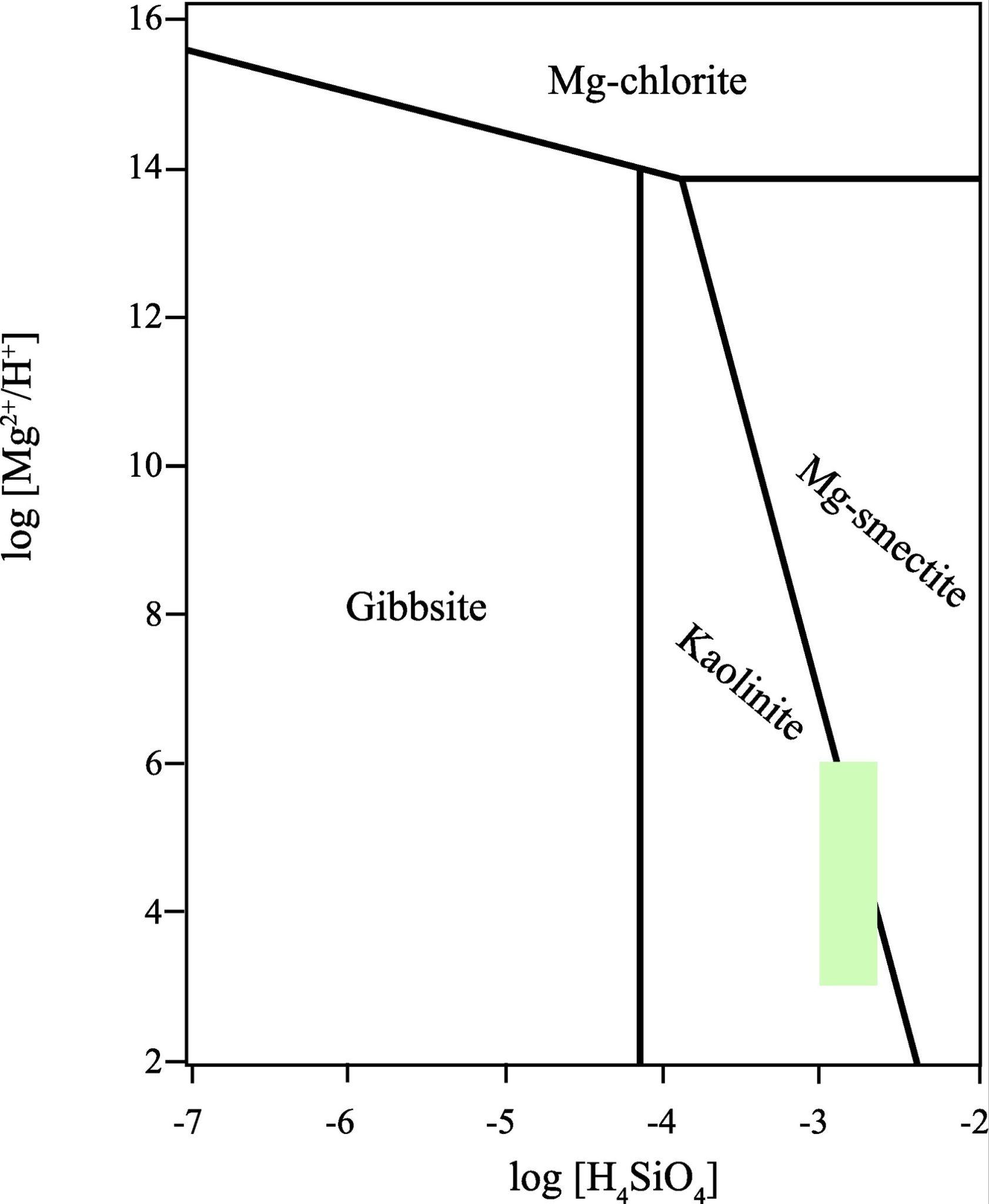
The study is candid about where its estimates are most uncertain, and those uncertainties are worth taking seriously now, rather than bracketing for later consideration. The most fundamental is methodological. CDR in this experiment, as in most ERW research, was calculated indirectly (from divalent cation concentrations in leachate solutions) rather than measured as direct atmospheric CO₂ drawdown. If calcium or magnesium liberated by weathering is retained in soil exchange sites or reprecipitated into secondary clay minerals before reaching the leachate collector, it will not register in the CDR calculation, leading to underestimates. Conversely, if the oxalic acid used to simulate soil organic acids enhanced weathering beyond what natural soil conditions would produce, the 14-day rates may overstate what a full growing season delivers.
These are not fatal flaws, but they suggest that the field urgently needs robust monitoring, reporting and verification protocols that can track carbon from mineral dissolution through soil drainage to its eventual fate in groundwater or the ocean. The convergence of the analyses in Ryan et al. around a net figure of 3.2 tonnes per hectare per year provides evidence that can support early policy decisions. But scaling ERW to millions of hectares will require measurement infrastructure that goes well beyond what laboratory experiments, however carefully designed, can provide.
Arenal’s 1993 lava flows, Barva’s late Pleistocene basalts, the andesitic sediments still accumulating on the Osa Peninsula, these are active participants in the carbon cycle, releasing calcium and magnesium as they weather, consuming CO₂ in the process. What ERW proposes is an amplification of that geology, taking the rock that Costa Rica’s tectonics continuously produce, grinding it to the particle size where weathering accelerates, and spreading it across the degraded agricultural soils that have lost the mineralogical capacity to do this work themselves.
The case for starting here is climatic, and increasingly institutional. As carbon markets mature and as monitoring, reporting and verification frameworks improve, regions with the right rocks and the right rainfall will find themselves at the center of the CDR conversation. And Costa Rica may already be there.
Qi Zheng is an undergraduate student in Environmental Policy and Sustainable Development with Economics at the London School of Economics and Political Science. She is interested in climate policy, soil carbon sequestration, and sustainable land management, and is also exploring the intersections of environmental governance and economic development.
Support us on Patreon
Thank you for joining us today! Please become a member of RTE and support us on Patreon. Unlike many larger organizations, we work with a team of determined and passionate volunteers to get our message out. We aim to continue to increase the awareness of remineralization to initiate projects across the globe that remineralize soils, grow nutrient dense food, regenerate our forests’ and stabilize the climate – with your help! If you can, please support us on a monthly basis from just $2, rest assured that you are making a big impact every single month in support of our mission. Thank you!


Donte
June 20, 2026 (11:23 pm)
Wow, this post is nice, my younger sister is analyzing
these things, so I am going to inform her.