Ukraine’s Path to Soil Remineralization
In a field in Eastern Ukraine, where heavy military equipment was moving just a few months ago, agronomists are now attempting to restore degraded soils by spreading finely ground basalt across the soil. What looks like an ordinary farming operation is, in fact, an attempt to build an evidence pipeline:mineral → field → measurement → standardization. This is where agronomic effects can already be observed on the ground, though the climate layer still requires formal Monitoring, Reporting, and Verification (MRV) frameworks, that is, a transparent system for monitoring, reporting, and independently verifying carbon dioxide removal.
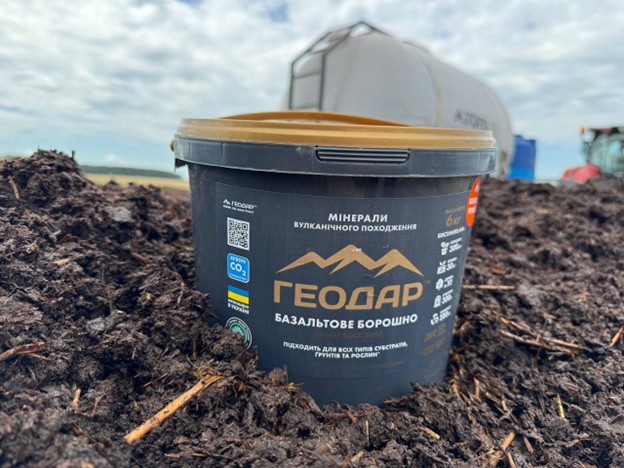
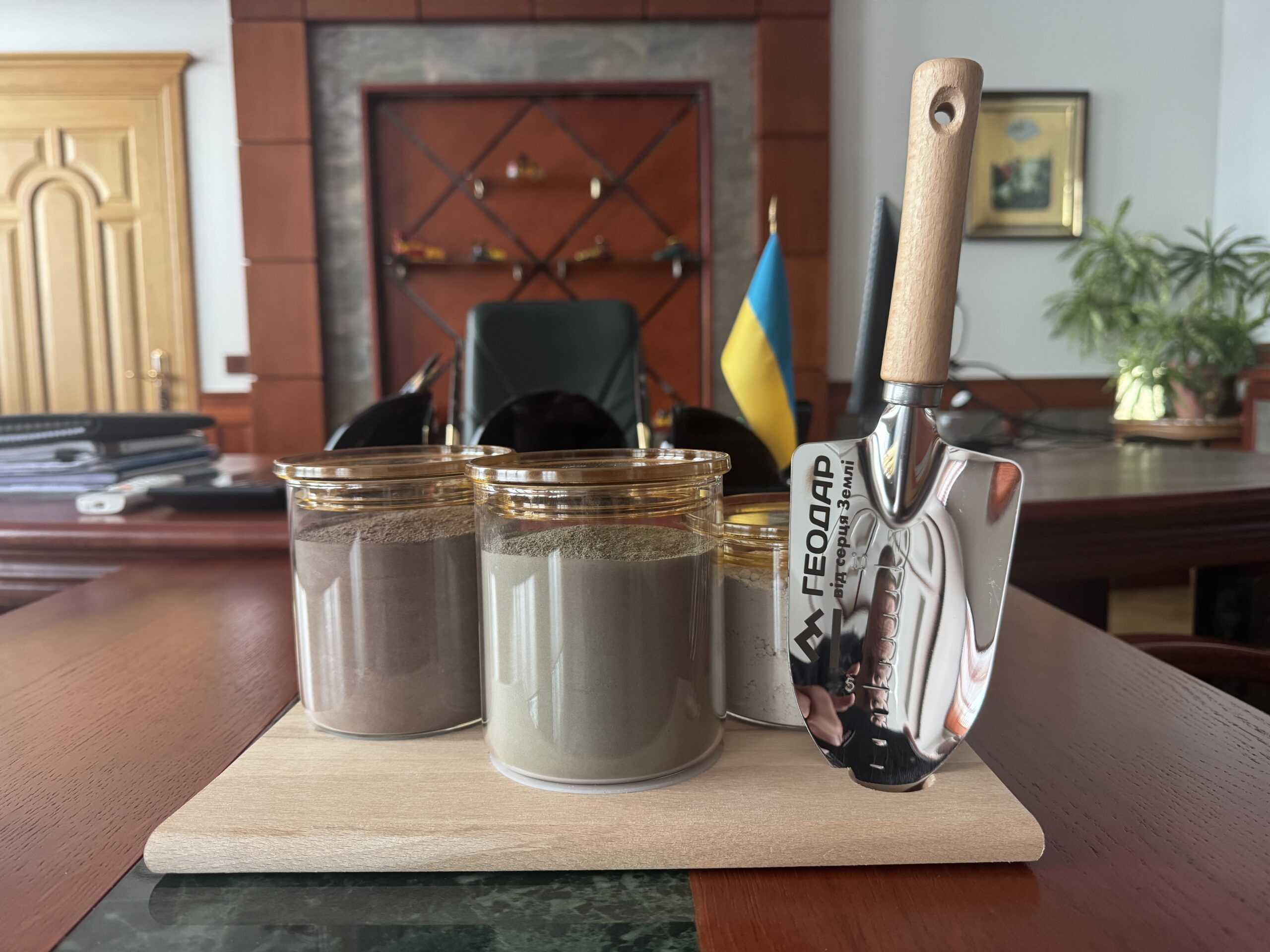
This is the operational landscape of GEODAR, the first industrial-scale project in Ukraine applying soil remineralization and Enhanced Rock Weathering (ERW) as a tool for soil restoration and climate impact. Built on domestically sourced minerals and deployed directly on working farmland, GEODAR is building an end-to-end operational workflow that begins with the extraction of rock dust, crushing to optimal fineness, quality control, application, and the collection of field data.
The project is currently in the testing phase: production and application are already taking place in real farm operations, while the evidence base is still being collected and standardized. Agronomic outcomes are being documented through field observations and case studies; the carbon component requires comparable protocols, independent measurements, and MRV to move from hypothesis to verified result.
“Our goal is not simply to be just another product,” says Vadym Radionov, an agronomy specialist and Deputy Director of the Rafalivskyi Quarry. “Our mission is to restore the land’s capacity for life—and the resilience of agriculture.”
From Quarry to Field: How a Climate Tool Becomes Infrastructure
For decades, basalt in Ukraine was seen mainly as a material “for roads and concrete”, a rock quarried in the Volyn-Polissia region for construction and industry. But the stone has a second storyline: when it is milled into a fine powder and returned to farmland, it begins to function as soil infrastructure: slow, cumulative, and built to last for years.
Vadym Radionov is an agronomy expert and soil remineralization practitioner, Deputy Director of Rafalivskyi Quarry, and coordinator of on-farm production and soil practices, ESG and ERW workstreams within the LAD corporation. In his work, quarry and field are rarely separate worlds: he is responsible for ensuring that the industrial logic of mineral processing for soil remineralization (application rates, seasonality, observations, and data) aligns with agronomic reality.
Over more than a decade in the agricultural sector, he has moved from field crop production and seed operations to implementing livestock-waste composting and mineral remineralization using volcanic and sedimentary rocks. While managing an agricultural enterprise of roughly 4,700 hectares (wheat, corn, sunflower, soy), he has also advanced cover cropping, soil-structure restoration, and a soil biology-focused approach to farming through the 3M model: organic Matter, Microorganisms, Minerals.
Within the GEODAR system, basalt follows a pathway that serves multiple purposes at once. It is extracted, milled to a fine powder, tested, and returned to fields as a long-acting mineral amendment. Unlike inputs that deliver a rapid but short-lived effect, basalt plays the long game: it helps stabilize acidity, supports soil structure, gradually adds calcium and magnesium, and creates more resilient conditions for soil life.
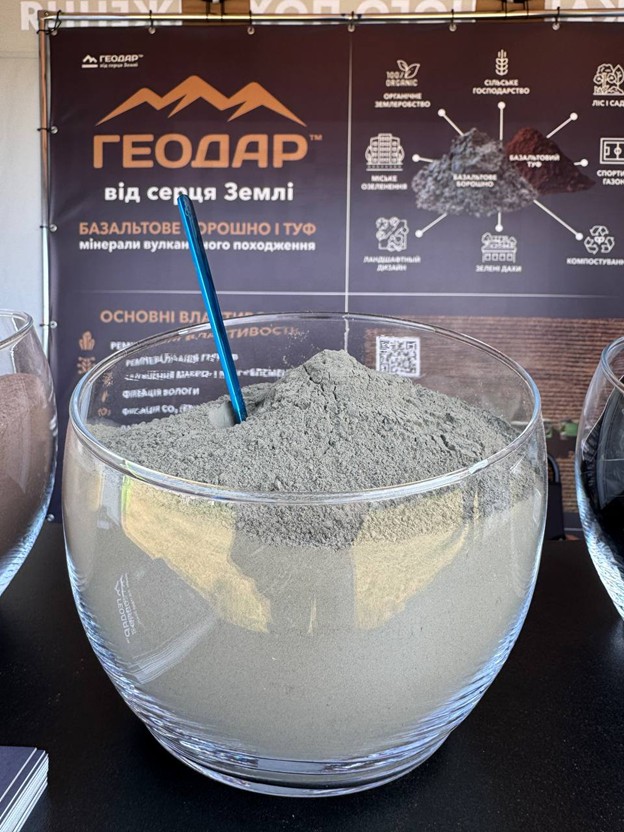
“This is not a one-season effect,” Radionov explains. “Basalt works for years.”
In parallel, it also has an impact on the climate. ERW builds on natural silicate weathering. In an active soil environment, minerals react with a portion of CO₂, creating more stable forms.
However, when it comes to issues like carbon credits, a climate benefit becomes a “result” only when it can be measured in a comparable way through standardized sampling protocols, clearly defined baselines, and reliable MRV frameworks.
GEODAR’s strength is not only its scientific framing, but the fact that it has organized “quarry to field” as a single chain. Extraction, controlled milling, standardization, laboratory quality control, and application occur at scales where mechanization truly matters. And then comes the most important part: these results are tested under real-world conditions and compared across zones. Against the global ERW landscape, where many projects still operate as pilots on limited farms, this combination of industrial discipline and field practice is an attempt to build infrastructure where pilot studies usually end, creating an integrated chain, application at scale, and cross-zone verification.
Few countries convey the urgency of soil restoration as starkly as Ukraine. Decades of intensive farming disrupted organic-matter cycles long before the war compounded the damage. Trenching, explosions, fuel residues, compaction from heavy machinery, and destroyed drainage systems have destabilized vast areas of fertile black soils.
At the same time, Ukraine remains one of the world’s strategically important food exporters, so restoring soils in this context is not only an environmental issue but also a factor of geopolitical resilience. ERW is particularly relevant here because it functions both as an agronomic tool for soil recovery and as a potential climate component, provided there is robust monitoring and MRV. Against this backdrop, GEODAR makes ERW operational by running it end-to-end: sourcing and milling local basalt, applying it on working farms, and linking field practice to quality control and field measurements.
From Theory to Fields: Early Results
The shift from laboratory hypotheses to field data in Ukraine began in 2025, a year when moisture deficit became the main constraint on yields. In the south-eastern part of Ukraine, rock dust was applied at roughly 2 tonnes per hectare, both as a standalone practice and in combination with organic composts. Early observations noted changes that are often difficult to detect in a stress year: yield gains on selected plots, signs of improved soil physical condition, and better structure and aggregation.
Some of the most illustrative results came from the Dnipropetrovsk region. Under drought conditions, reported corn yields increased by 10%, which adds up to about $125 per hectare. When combined with compost, yields increased up to 18%, and for sunflowers, the increase was around 20%, which is an extra $210 per hectare. The results require a larger sample and a more robust trial design to separate the mineral’s contribution from weather and management practices, but are still promising.
GEODAR’s Collaboration with Scientific and Research Institutions
In the ERW ecosystem, it is not enough to claim an impact on soils. Effects must be demonstrated through measurements: feedstock safety, changes in soil indicators, and reproducible outcomes on farms. Part of this work relies on Ukrainian scientific and agricultural institutions that help turn the mineral into an observable, measurable input. In public descriptions, the company refers to cooperation with leading agrarian universities, the A. N. Sokolovskyi Institute of Soil Science and Agrochemistry of NAAS, the Institute of Animal Science of NAAS, as well as a preliminary agreement on cooperation with the State Institute of Soil Protection of Ukraine.
A separate layer concerns safety and standards compliance. GEODAR names the L. I. Medved Institute of Ecohygiene and Toxicology as an official laboratory partner, responsible for heavy-metal analyses, radiological control, and assessment of compliance with EU Regulation 2019/1009. This block matters as an “admission procedure” that sets the boundaries of where the product can be used under stricter regulatory regimes and helps ensure that ERW functions as a verifiable practice.
In parallel, the company reports field trials with farmers and agribusinesses across different regions of Ukraine—from Polissia to the Steppe, including southern and eastern territories. For ERW, this geography has practical relevance: the same mineral amendment can behave differently in sandy soils, fertile black soils, and loams, and under drought versus high-moisture conditions. The more diverse the trial base, the closer the project comes to standardizing recommendations, and the lower the likelihood that observed effects depend on the unique conditions of a single site.
That ecosystem-building logic also shows up in smaller stories. Radionov notes that the team has been supporting Nikita Oleynikov, a student at the National University of Life and Environmental Sciences of Ukraine, whose basalt-dust startup placed second among 46 contenders, an early signal that the next generation is already treating mineral soil restoration as a practical field.
Finally, GEODAR hopes to achieve international integration into ERW initiatives and verification mechanisms, including Carbon Credit Ukraine. This suggests that the project’s horizon extends beyond agronomic outcomes and into MRV approaches, carbon frameworks, and efforts to embed Ukrainian field data into a global architecture of demonstrable climate impact.
Scalability as a Systems Question
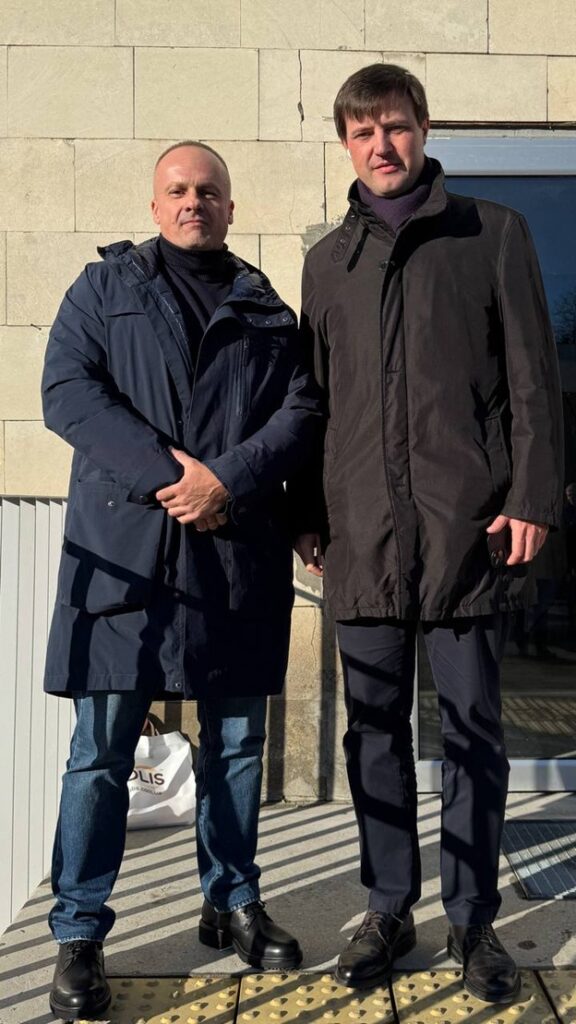
When it comes to ERW, scaling rarely comes down to the chemistry of the process itself. More often, the constraints are practical: where to source a suitable mineral, how much it costs to transport, and who can verify that the claimed effect actually occurred.
Ukraine’s configuration looks different. Basalt here is not an imported resource: it is local, industrially quarried, and processed within existing quarry infrastructure. This reduces transport costs and the emissions associated with hauling materials, and more importantly, removes reliance on fragmented supply chains. In this case, the key is not the speed of growth but the reduction of structural risk, so that further development does not require constantly rebuilding logistics solutions.
From an investment perspective, such a model sits at the intersection of several domains at once: agricultural resilience, climate infrastructure, and emerging carbon removal markets. As ERW methodologies and monitoring, reporting, and verification (MRV) systems mature, Ukrainian soils could potentially become part of formal carbon accounting mechanisms. It is precisely in this interval, between agronomic impact and institutional recognition, that long-term capital tends to take interest.
At a forum in Kyiv focused on international cooperation in the agricultural sector, ERW was discussed as a potential tool for restoring soil fertility under conditions of land degradation and climate pressure. In dialogue with representatives of the Ministry of Agrarian Policy, the GEODAR approach was presented in terms of sector-wide applicability, where the foundations for scaling, trust standards, and future support mechanisms begin to take shape.
It was here that the GEODAR team identified its next step. The idea is to establish a non-profit public platform, provisionally titled the Association for Geo-Soil Remineralization. Such a platform is expected to bring together quarries with agronomically valuable rock resources, farmers, biochar producers, and scientific institutions, united around a shared direction of mineral-based soil restoration. It is an attempt to move from fragmented initiatives toward a coordinated ecosystem, without tying the agenda to a single product or company.
Signals of Sector Recognition
In 2025, GEODAR’s basalt rock flour was presented to the professional community at the Forum of Agricultural Innovations, Nove Zerniatko 2025, where the discussion remained firmly practical and grounded in farm experience and the real constraints of implementation.
That same year, the project won the “Do Your Own” business-ideas competition organised by the MHP-Hromadi Fund, supported by one of the largest agricultural holdings in Ukraine, PJSC Mironovsky Hliboproduct (MHP), which focuses on environmental responsibility and support for local solutions with long-term social and ecological impact.
The next accolade came through the national award “Best Business — 2025” whose presentation was accompanied by a visit from the competition’s representatives to the production site. In industry practice, such site visits are rare and typically reserved for initiatives evaluated for both commercial potential and broader public significance.
Taken together, these episodes take on larger significance as indicators of a wider shift. Remineralization is becoming a topic of sector-wide conversation and is moving toward the conditions where measurement and standards are no longer optional.
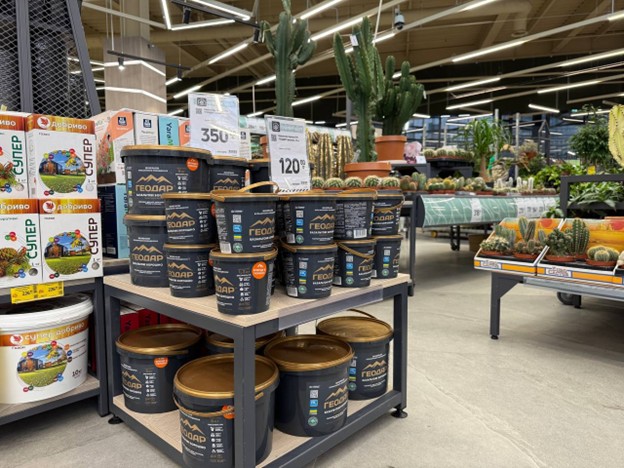
GEODAR’s collaboration with Remineralize the Earth (RTE) functions as a channel for integrating Ukrainian experience into international remineralization practice. The collaboration is formalized through a Memorandum of Cooperation signed in November 2025, establishing a shared agenda for research, pilot formats, and the development of verification-ready practices. The practical side of the partnership presents a set of tasks familiar to most early-stage ERW projects: developing demonstration fields, exchanging methods for sampling and analysis, feeding field observations into international knowledge bases, and adapting MRV approaches to Eastern European conditions.
GEODAR is currently at an early infrastructure stage: field operations are expanding, processing capacity is being scaled up, MRV data is being collected, and partnership networks are taking shape. The project needs partners who can help accelerate the next step from fragmented cases to a comparable evidence base. field-trial design, laboratory support, measurement protocols, and financing for scaling. For those looking for climate impact at the intersection of food systems, mineral resources, and land regeneration, the point of entry is here—right now.
Beyond Technology: Farmers, Regulation, War, and Systemic Risks
Beyond the technical dimension, ERW faces one of its most underestimated challenges. For many Ukrainian farmers, basalt dust does not register as “fertilizer” in the conventional sense: it produces no immediate visual effect, offers no quick “greening,” and works gradually over multiple seasons. At present, ERW in Ukraine has no distinct legal category in either agricultural or climate regulation, so certification, integration of MRV approaches, and product classification are still in formation.
As a result, GEODAR’s work extends beyond product supply and includes an educational component, through field demonstrations, agronomic consultations, and science communication on mineral nutrition, as well as by restoring an understanding of soil as a living mineral system. This cultural shift—from short-term stimulation to rebuilding the foundation—moves slowly, but it is precisely what underpins long-term regenerative agriculture.
In parallel, wartime logistics, damaged infrastructure, and energy instability add systemic risk to every production cycle, from extraction and processing to delivery and field application. And yet these very conditions can also accelerate innovation: post-war recovery will require solutions that work at scale and in real-world conditions on damaged landscapes and degraded lands, not only in laboratory scenarios.
In this context, GEODAR is testing whether basalt can restore soils at scale, with early signs of efficacy already visible. Further developments like carbon credits depend on MRV and third-party verification. If, in the coming years, ERW begins to move beyond scattered trial sites and becomes a reproducible practice with clear protocols, data, and MRV, then Ukraine may be among the few regions where resource, scale, and necessity align. That is the value of this moment: it is possible to build an infrastructure of trust now, before the market locks in the rules of the game.
“Bread from Stones”: Reviving a Forgotten Logic of Soil Nutrition
The idea of using crushed rock to restore soils has deep historical roots. As early as the nineteenth century, German agrochemist Julius Hensel argued in his book Bread from Stones that minerals are the foundation of soil nutrition.
Today, GEODAR is bringing this concept back through a modern scientific lens. As part of the project’s educational work, a Ukrainian translation of Hensel’s book is being prepared. The goal of the initiative is to restore farmers’ understanding that soil health begins not with stimulation, but with a mineral foundation.
Valeriia Tarasenko is a science writer and environmental policy researcher with expertise in sustainability, climate resilience, and ecological governance. She holds a Ph.D. in Public Policy from Fudan University and works at the intersection of environmental research, policy analysis, and science communication. Her writing focuses on translating complex scientific knowledge into accessible, policy-relevant insights that advance public understanding of soil restoration, climate challenges, and sustainable development.
Support us on Patreon
Thank you for joining us today! Please become a member of RTE and support us on Patreon. Unlike many larger organizations, we work with a team of determined and passionate volunteers to get our message out. We aim to continue to increase the awareness of remineralization to initiate projects across the globe that remineralize soils, grow nutrient dense food, regenerate our forests’ and stabilize the climate – with your help! If you can, please support us on a monthly basis from just $2, rest assured that you are making a big impact every single month in support of our mission. Thank you!


Jerry Duncan
April 2, 2026 (9:53 pm)
Hello — I have approximately 4,000 tons of 200-mesh basalt fines available in bulk in southern Oregon.
The material is suitable for soil remineralization, compost mineralization, or enhanced rock weathering applications.
I’m looking to partner with fertilizer manufacturers, soil producers, or carbon removal projects that can use bulk quantities.
If this is of interest, I’d be happy to provide particle size data, mineral analysis, and discuss truckload pricing and samples.
Thomas Vanacore
April 14, 2026 (3:50 pm)
Great article and fantastic work by Vadym bringing forward a solid understanding of the practical applications of soil remineralization in the modern era!