
The Kingston Wollastonite Rebate
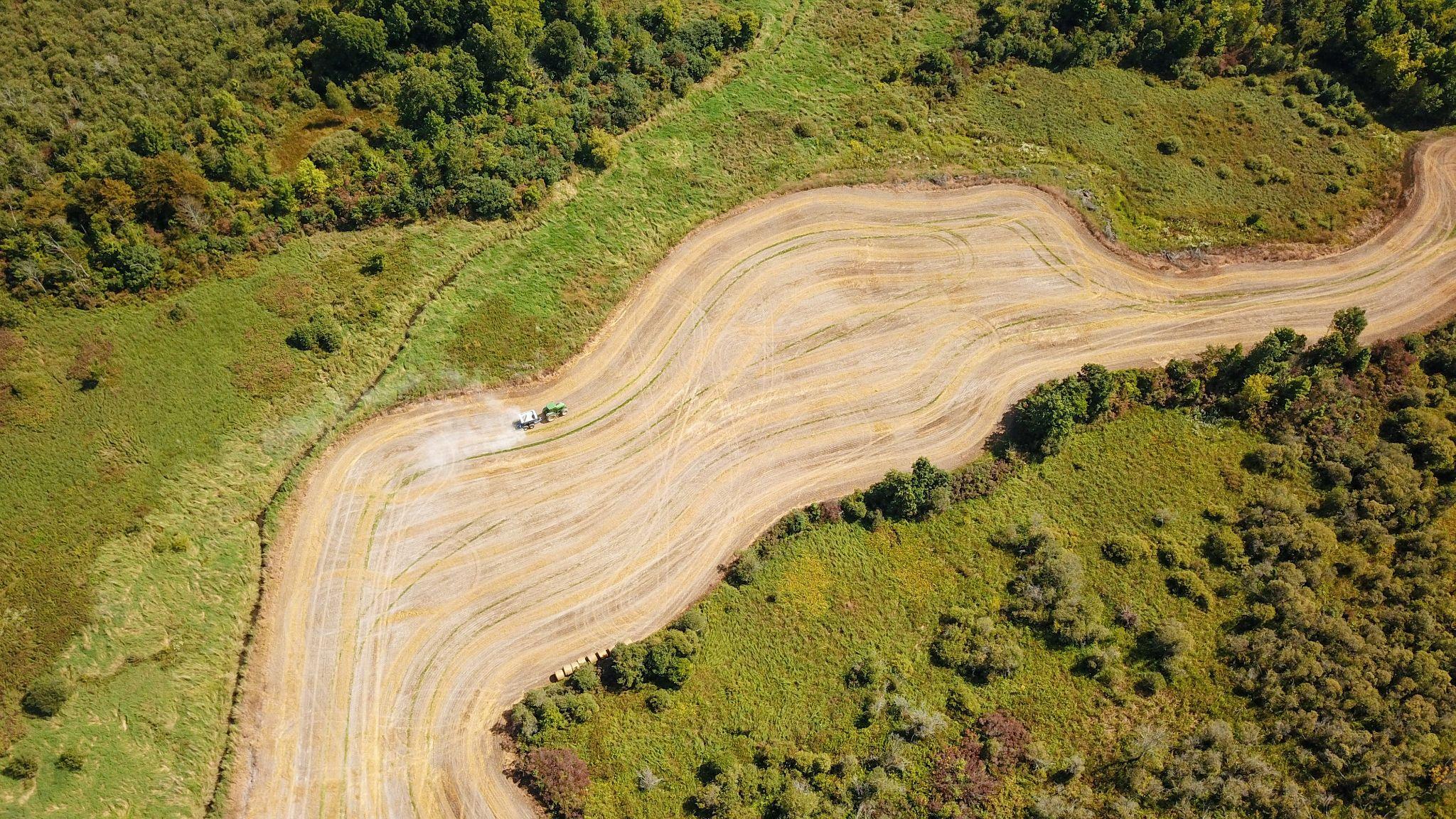
Aerial Shot of Crushed Wollastonite Being Spread on Local Farmland. Courtesy of UNDO.
Kingston, Canada, nicknamed the “Limestone City,” is known for its heritage buildings made of local stone; however, another local material is attempting to innovate the city’s agricultural industry: wollastonite, which could play a role in advancing enhanced rock weathering.
Wollastonite (CaSiO3) is a naturally occurring calcium sulfate with an extensive resume: decorative stone, asbestos replacement, insulation, horticulture, ceramics, and plastics, just to name a few of its many uses. One of the benefits of this mineral is its indifference to other manufactured materials during the industrial process. It also breaks down into small, needle-like (acicular) particles, allowing it to be a great choice for reinforcing other materials such as plastics.
A Major Player in Enhanced Rock Weathering
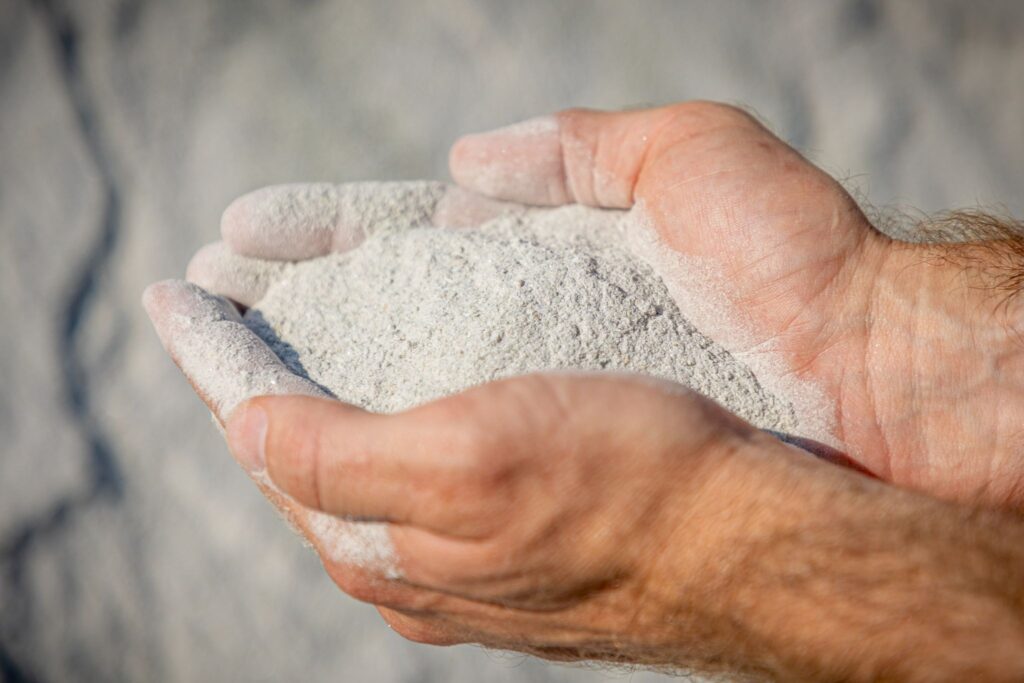
In addition to its industrial uses, there are also a myriad of agricultural advantages to Wollastonite. When crushed into rock dust and incorporated into the soil through the process of enhanced rock weathering (ERW), it is greatly beneficial – long-lasting and capable of stabilizing the soil’s pH as well as improving crop resilience. Unlike other materials, like fertilizer, that degrade quickly, Wollastonite breaks down slowly, providing multi-season and compounding benefits. It is further certified for use in organic farming by the Organic Materials Review Institute (OMRI), a third-party nonprofit accredited by the U.S. Department of Agriculture (USDA) to review soil inputs.
Aside from agricultural benefits, ERW also aids in carbon sequestration, the process of capturing and storing carbon from the atmosphere. Carbon dioxide reacts with alkaline rock dust to form calcite, which can then be stored in ground or ocean water. Wollastonite, a calcium sulfate, has a proven track record as ERW feedstock. A 2023 study by Emily E. E. M. te Pas, Mathide Hagens, and Rob N. J. Comans demonstrated that Wollastonite has “a relatively high enhanced weathering potential,” when compared with other minerals in the context of carbon dioxide sequestration. Wollastonite dissolves quickly, providing data to researchers much faster than other soil inputs and making it an excellent tool for reducing greenhouse gases.
The Kingston Rebate Program
UNDO is a leading carbon removal company with a mission “to permanently remove over a billion tonnes of CO2 and make carbon removal accessible to all.” In furtherance of their goal, UNDO started the Canadian Farmer Program, through which Eastern Ontario farmers can apply for free Wollastonite for the purposes of ERW, paying only the costs of trucking the material.
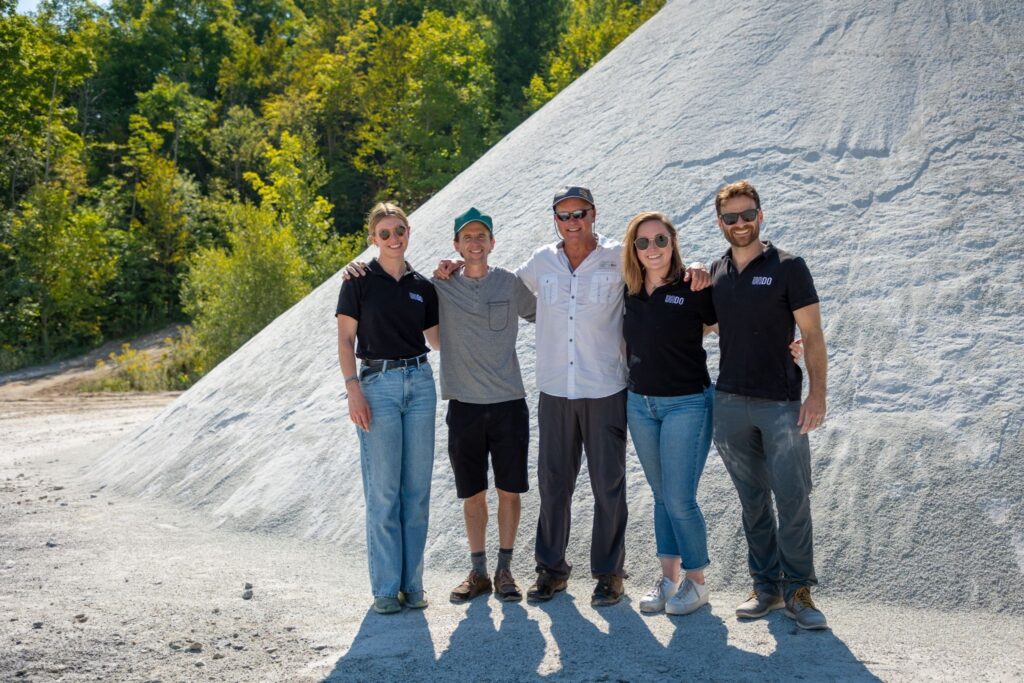
According to UNDO’s Farmer Operations Manager Harris Ivens, farmers can anticipate three major benefits to adding Wollastonite rock dust to their fields: strengthening crops and protecting yields, natural pest and disease resistance, and long-term soil health. Already, UNDO has provided Wollastonite dust to over 190 farms and a combined 27,000 acres of land.
Taking the Farmer Program a step further, UNDO adopted an initiative to subsidize the cost of trucking for one farming community with approximately 30,000 acres of eligible farmland, meaning that for a limited number of farm operators, there may be zero cost to gain the benefits of ERW. This community, Kingston, Canada, is located just 32 miles from Seeley’s Bay, which is home to a rich deposit of Wollastonite.
Eligible farms must have a soil pH in the range of 5.5 to 7.0 and be 25 or more acres in size. UNDO provides free professional soil testing to determine eligibility. For eligible farms, UNDO’s local operational partner, Canadian Wollastonite, will coordinate the transport and application of Wollastonite dust. Farmers can also apply for the Kingston Rebate by submitting trucking receipts to receive $5 per ton in transport rebates.
Ivens describes Canada as a “global superpower for carbon removal with its abundant natural resources, commitment to net zero by 2050, and political landscape, making it a great place to operate.” He believes that, with the proper implementation of ERW strategies, Canada has the potential to sequester hundreds of thousands of tons of carbon.
When asked if he is aware of any similar initiatives, Ivens expressed UNDO’s intention to replicate this model in other locations, calling it “a win win win, for the climate, the soil and the community.”
Interested farmers can contact UNDO for free soil eligibility testing at (343) 333-5851 or operations@un-do.com. Visit www.un-do/canada for more information.
Caelyn Radziunas is an attorney based in New Orleans, where her practice includes toxic tort litigation. In addition to her J.D. from Tulane Law School, she holds a B.S. in Wildlife Biology from the University of Vermont. Caelyn focuses on the application of scientific knowledge to environmental law and policy for the benefit of vulnerable communities and ecosystems.
Support us on Patreon
Thank you for joining us today! Please become a member of RTE and support us on Patreon. Unlike many larger organizations, we work with a team of determined and passionate volunteers to get our message out. We aim to continue to increase the awareness of remineralization to initiate projects across the globe that remineralize soils, grow nutrient dense food, regenerate our forests’ and stabilize the climate – with your help! If you can, please support us on a monthly basis from just $2, rest assured that you are making a big impact every single month in support of our mission. Thank you!


Got something to say?