
CDI’s New 48 Hour Shaker Test Speeds Up Verification of Enhanced Rock Weathering
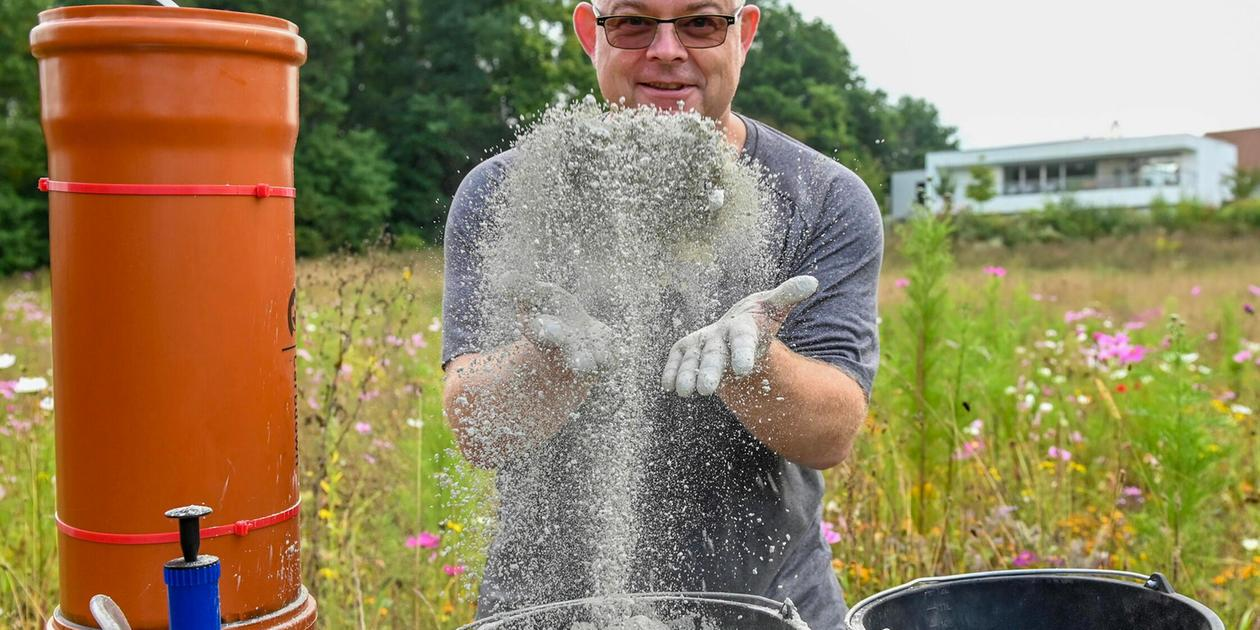
Dirk Paessler, Founder and CEO of Carbon Drawdown Initiative
There has been a breakthrough by the Carbon Drawdown Initiative (CDI): they have discovered how to speed up the testing of Enhanced Rock Weathering (ERW) using the 48-Hour Shaker test, a rapid verification of weathering that will advance Carbon Dioxide Removal research and aid in the development of standardization within the field. This research is done through CDI’s Project Carbdown.
Project Carbdown is a project implemented by the Carbon Drawdown Initiative in partnership with scientists across Europe, including 20 scientists from 6 universities. Project Carbdown is a form of Carbon Dioxide Removal (CDR), which encompasses technologies, practices, and approaches that remove and durably store carbon dioxide from the atmosphere. The Intergovernmental Panel of Climate Change states that CDR is required to achieve global and national targets of net zero CO2 and greenhouse gas emissions but is not a substitute for immediate and deep emissions reductions. CDI aligns with this perspective and also emphasizes the importance of scalability, speed, and permanence within CDR. Their work centers around the belief that ERW fulfills all of these requirements. This builds on CDI’s previous work.
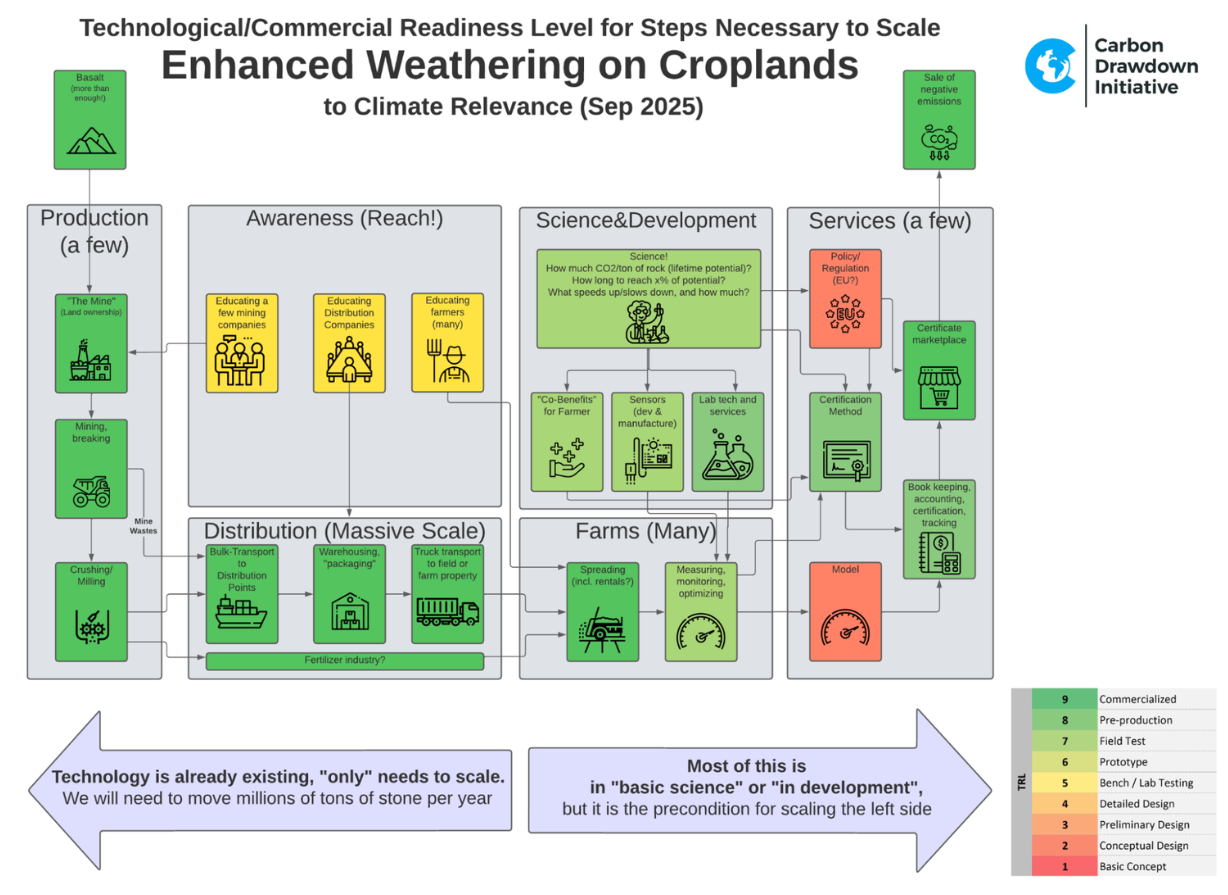
They have been working to speed up monitoring, reporting, and verification (MRV) so ERW can scale up at the national and international level.
CDI, based in Germany, is an organization whose mission is to “contribute to the creation and growth of the emerging carbon dioxide removal (CDR) industry. They support people and companies in the CDR industry through policy and advocacy, impact investments in CDR startups, and scientific research. CDI is also a leader in ERW research with a goal to “identify which soil and rock combinations are more effective — or, in some cases, ineffective — at CO2 removal”.
What is Project Carbdown (2021)?
CDI explains how “the basic idea of Project Carbdown is to incentivize the spreading of rock powder along with biochar on agricultural fields which lead to the removal of CO2 from the atmosphere from Enhanced Rock Weathering”. They also emphasize the importance of repaying farmers within decarbonization efforts. This central theme of justice within their ERW research ensures the farmers would be able to sell CO2 removal credits along with their produce, giving them extra income and other potential benefits, such as increased crop yields through improved soil pH and further nutrients delivered by the rocks, which would partly replace fertilizer and lime.
The ultimate goal of this project is to “prove that we can measure the minimum amount of weathering process by measuring the reaction products that were released from the weathering of the basalt/dunite, preferably measured with cheap electronic sensors in the ground”.
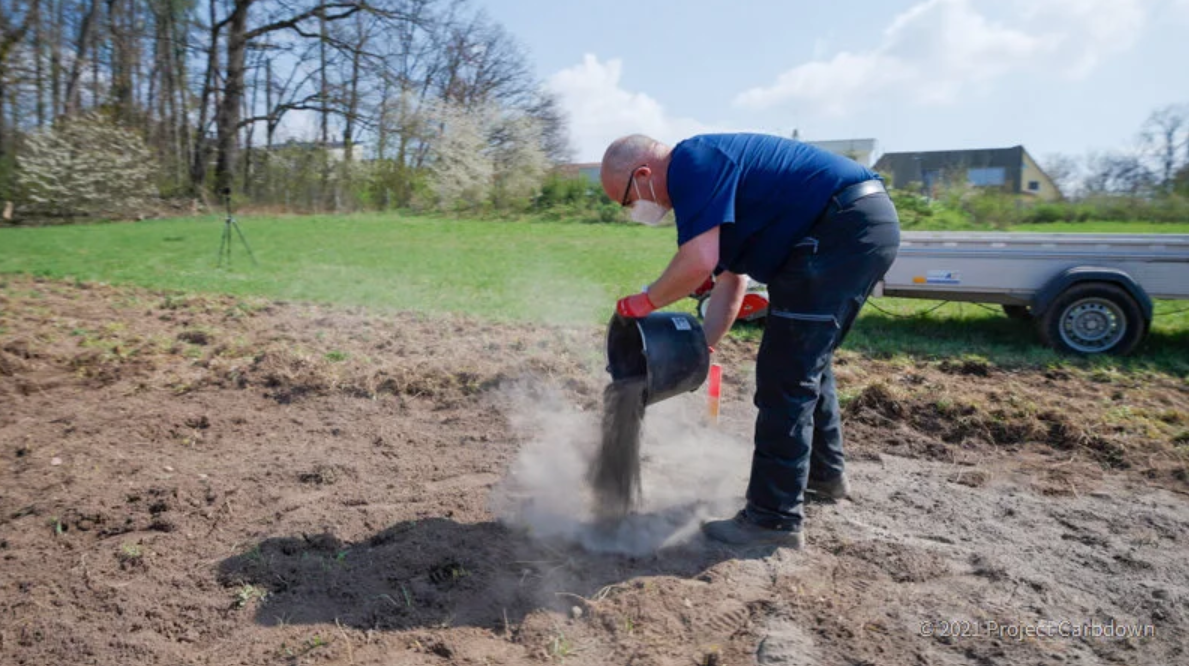
Mineral weathering is a natural process that always occurs on Earth, but it normally takes place over millennia. Project Carbdown builds upon these natural processes through “intentionally selecting the optimal minerals and using farming to accelerate the weathering rate” and speeding it up to become effective on a human time scale.
As they explain, “Enhanced weathering will only succeed as a climate relevant method for negative emissions if there are reliable ways of measuring the drawdown of carbon from ambient air.”
Their goal was “to be able to tell how much CO2 has been removed from the atmosphere per m2 in one year.” This allows them to assess any side effects and create an easy to use monitoring concept for the CO2 removal. One of the biggest challenges that CDI faced during their first year was finding a sensor-based method to measure ERW. They concluded that to measure weathering in real-life scenarios, they needed to develop sensors to detect specific trace elements. In their second year, they went on to develop three methods of monitoring ERW.
In a lecture by Dirk Paessler from CDI, he reported that significant progress has been made within the monitoring options, despite remaining hurdles. In particular, he described three options to monitor ERW:
- Direct Carbon Flux Analysis measures real-time CO2 reduction in the soil, and shows promising results in weeks instead of months but needs further research to close the gap between fluctuating data estimates.
- The Upper Bound approach looks at mineral dissolution, a method also used by other ERW organizations like Lithos and Eion. However, it struggles to confirm if the dissolved minerals are fully transitioned into permanent carbon storage because of complex soil interferences especially clay formation and cation exchange capacity. Simply put, cation exchange capacity is when soil particles “trap” chemicals (such as calcium ions) and don’t “let them go”. This process produces no changes detectable by the sensors, even though the carbon removal process is working perfectly.
- Leachate Water Analysis directly measures weathering products left in the water within soils. This method has yielded minimal detectable weathering signals, and thus may not be worth exploring any further with the current minimal resources.
The lack of rapid results signals a critical failure of current sensing equipment to detect such slow chemical changes within this ever-changing agricultural environment. This in turn emphasizes the importance of the 48-Hour Shaker Test and how its development has led to the fastest way to gaining the necessary data, without spending a small fortune.
What is the 48-Hour Shaker Test?
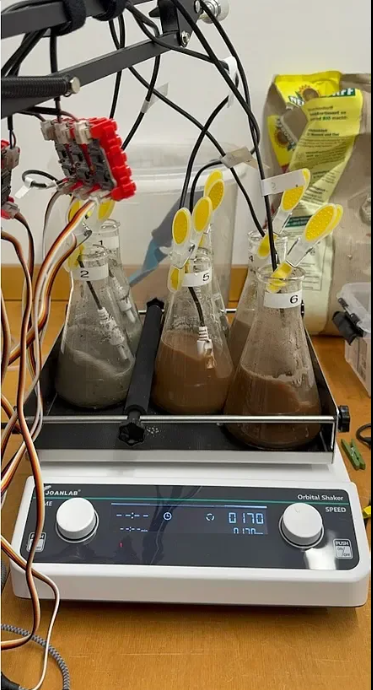
The 48-Hour Shaker Test addresses a huge problem within ERW: the time needed to fully confirm which soil and rock combinations have the largest CDR impact. Before the discovery of this screening tool, it took about a year in a controlled environment to verify any results. Field test results take even longer. Now, CDI has discovered that shaking a mixture of rock, soil, and water in an Erlenmeyer flask for just 48 hours produced results which are consistent with their two-year greenhouse experiments. They measured the increase in electrical conductivity as a proxy for alkalinity. While in the field, there are other ions that can interfere with conductivity, the test remains reliable, based on analysis conducted so far.
The 48 Hour Shaker Test is an extremely cheap option compared to other monitoring methods for ERW. One of the main limits to measuring the weathering rate in the field is how fast water can move through the soil. Through the shaker, this limitation is removed. While this cannot measure the actual speed a chemical reaction occurs in a real world environment, the chemical potential can allow scientists to predict what is possible under perfect conditions.
The 48 Hour Shaker test is a screening tool, not a quantification tool. It will greatly speed up the testing stages of ERW combinations, by identifying which candidates have potential, but it is a closed system test. Actual agricultural fields are an open system, where there are varying temperatures, bugs and worms, and rain. This test has the ability to predict, with a reasonable margin of error, the potential weathering.
The 48 hours test for MRV
MRV is an integral part of the future of environmental policy in general and CDR in particular. To understand it more fully, we can break it down to into its components:
- Monitoring: the actual measurement of emissions data
- Reporting: the communication of results to the public and to relevant institutions. This allows stakeholders, including the emitting facilities, to track changes in emissions and emissions reductions over time.
- Verification: the final step to ensure the accuracy of the reported data and its consistency and compliance with reporting requirements. This is necessary so decisionmakers can formulate policies based on the monitoring data and facilitate public acceptance of the data.
Without MRV there is essentially no value to carbon credits. It is currently one of the only ways to differentiate climate action and greenwashing within ERW.
The 48-Hour Shaker Test is not only a scientific discovery, but can also be a political force and major step towards standardization. Standardization can act as a common language within the ERW world. It would be done through establishing technical specifications for processes and removing barriers for international integration. Standardization would help ensure that ERW processes achieve the highest levels of efficacy and ethics possible. This would ensure that the process works in varied contexts and could be transferred to other areas of the world, allowing for scaling up.
This is a process which has already played out in many other industries, so it only makes sense that we expand standardization throughout the carbon removal industry. This test, and future MRV ERW tools, can be performed in any lab, anywhere, allowing different scientists to compare their “rock recipes” using the same measuring tools. There is still some work to be done to make this test the standard. It has worked primarily within European soils, specifically German soils. It is important to confirm that it works with diverse soils from across the world.
The purpose of scaling up is transitioning a technology from a laboratory prototype to a global industrial application. It is driven by, and challenged by, the feedback loop between our actions and the environment. There are so many variations which can and will occur with widespread adoption of ERW, and the goal isn’t to build a factory in which all soils are exactly the same. The goal is to work with living soils, which face different conditions and variations in farming techniques. Research teams from Cornell University and UC San Diego emphasize the importance of creating flexible frameworks for ERW which can handle these variations while remaining standardized enough for reliable application. We can all work together to find the best way to scale up and implement CDR strategies across the global economy. The Project Carbdown initiative and the 48-Hour Shaker test both provide the speed necessary to highlight the standardization needed for policy, and the scalability needed to impact global emissions.
This development progresses the “M” in MRV of potential outcomes. There is still much work to be done within the “V” or verification of actual sequestered carbon. Though we cannot alone rely on this test as the only monitoring tool, it allows researchers to find their starting points much faster than before.
This is crucial at a time where the climate crisis is progressing and we must take an all-hands-on-deck approach to our research and the implementation of these discoveries. Through the simplification of the “M” in MRV, CDI is working to clear a path to a standardized global market which would both reward farmers and protect the planet. This achievement is a major step in making ERW a global reality.
Brianna Ortiz is an environmental policy researcher who holds an MSc in Environmental Policy and Regulation from the London School of Economics, complemented by B.A. degrees in Environmental Studies and Political Science from DePaul University. Brianna’s work sits at the intersection of innovation and equity, with a specialized focus on AI agricultural technology, regenerative agriculture, and environmental justice.
Support us on Patreon
Thank you for joining us today! Please become a member of RTE and support us on Patreon. Unlike many larger organizations, we work with a team of determined and passionate volunteers to get our message out. We aim to continue to increase the awareness of remineralization to initiate projects across the globe that remineralize soils, grow nutrient dense food, regenerate our forests’ and stabilize the climate – with your help! If you can, please support us on a monthly basis from just $2, rest assured that you are making a big impact every single month in support of our mission. Thank you!


Got something to say?