
A Watershed Reveals Carbon Removal, Soil Buffering, and Metal Stabilization
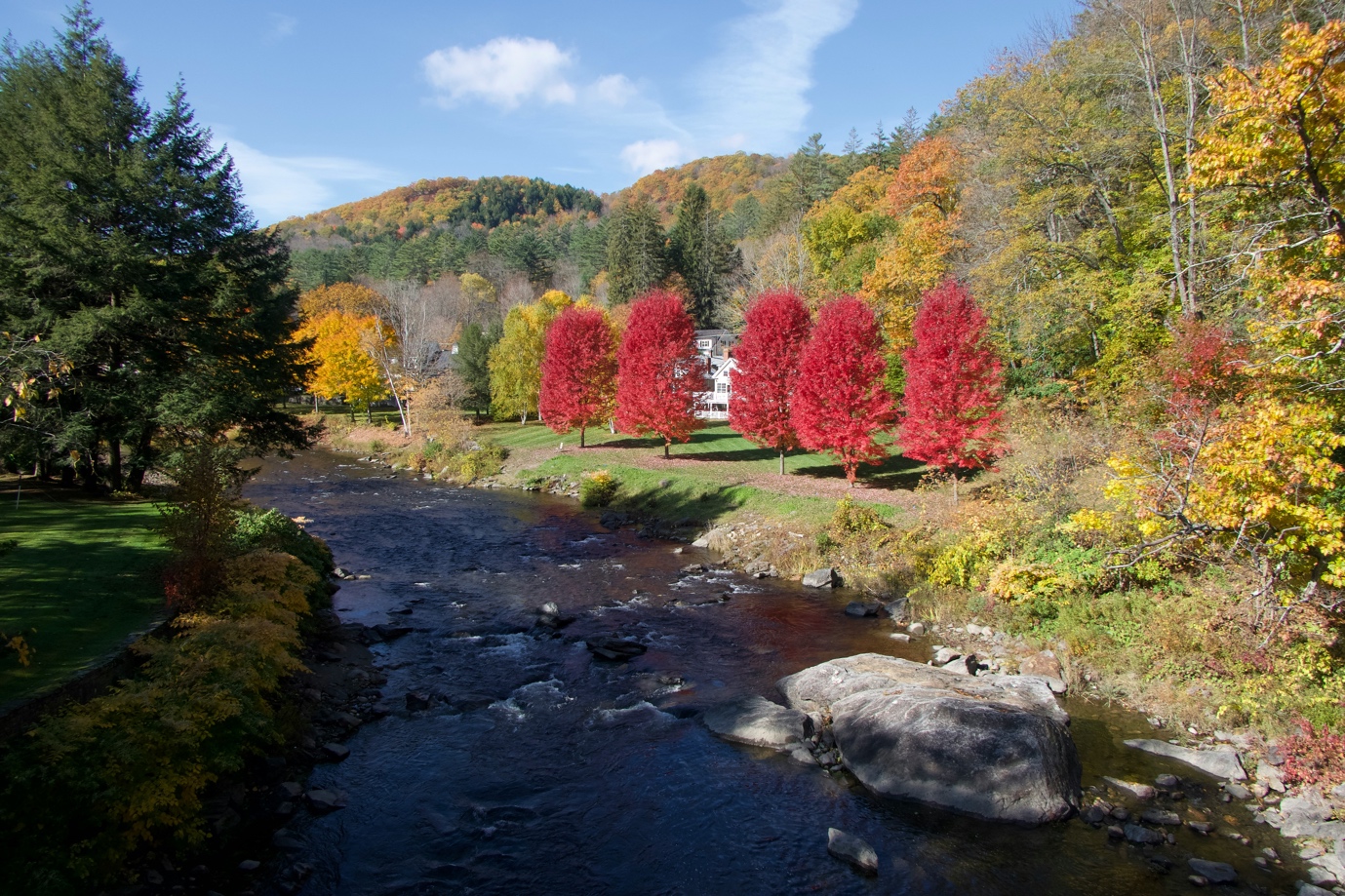
In June 2023, a team from Yale’s School of the Environment spread 400 tonnes of crushed basalt across hayfields and pastures in northern Vermont. Within weeks, the stream draining the treated land began telling a different chemical story.
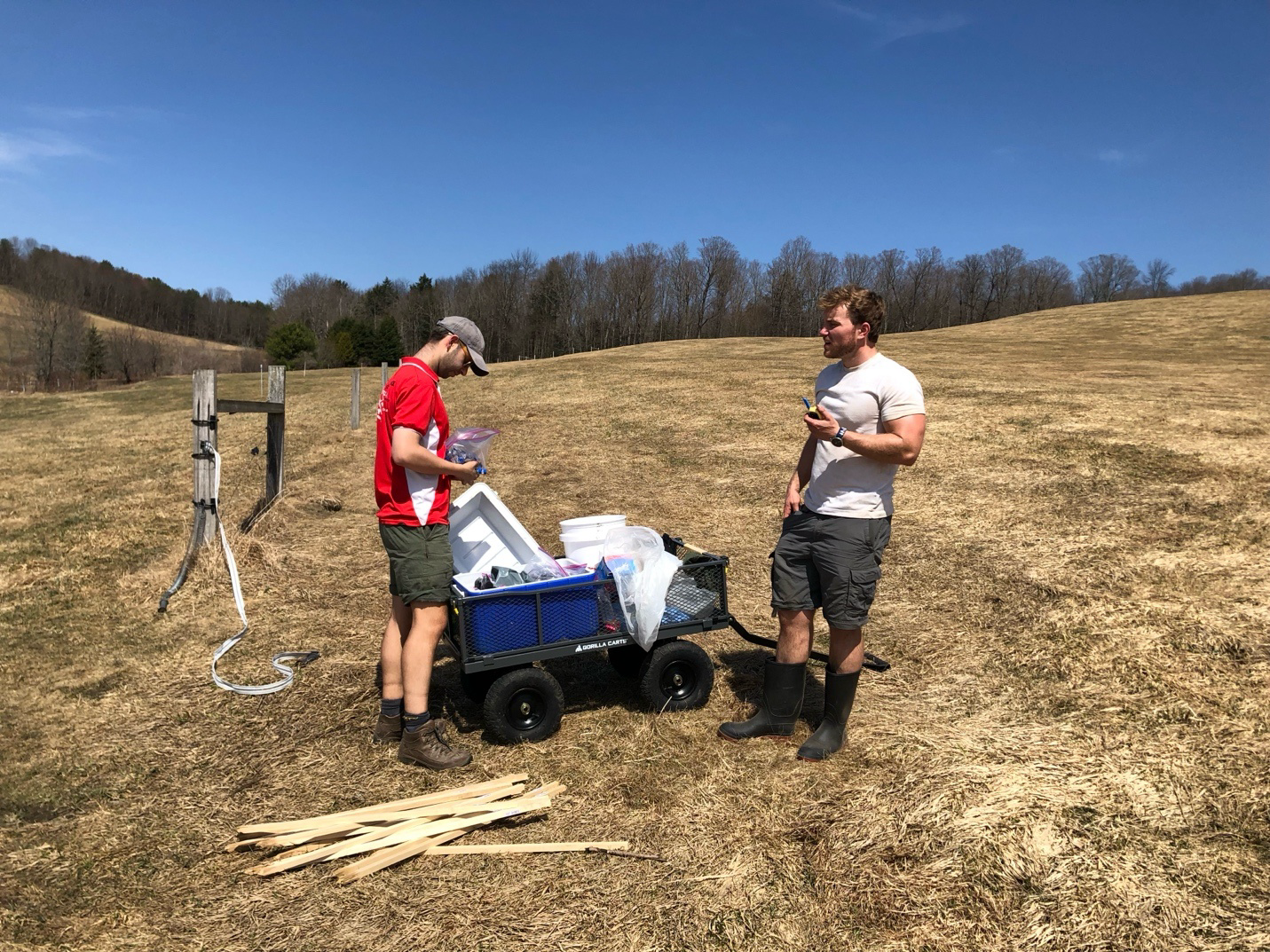
Two preprints from the Yale Center for Natural Carbon Capture now report what happened.Sun et al. (2025) tracked weathering products in the stream over two years, and Zacharias et al. (2025) measured changes in the soil. Together, they present the first watershed-scale evidence that enhanced rock weathering (ERW) delivers a measurable carbon removal signal within a single growing season, and that the same basalt also functions as a slow-release liming agent for temperate farmland. (For more, see Jerden, 2025 on this website.)
Additionally, a companion trace-metal preprint on Zacharias et al. (2026) and a follow-on methods paper on Zacharias (2026) point to a second, less expected implication of the experiment: the same buffering and transport processes that generate alkalinity can also reduce metal lability and may translate into a practical remediation method for shallow contaminated soils.
Most ERW field evidence to date has come from laboratories, lysimeters, or small plots – controlled settings that cannot capture how weathering products actually travel through soil, into groundwater, and out to a stream. Watersheds are where the real accounting happens. They integrate all of these processes into a single measurable output at the stream gauge, and what the Yale team has shown is that this output is detectable and seasonally predictable.
The Experiment
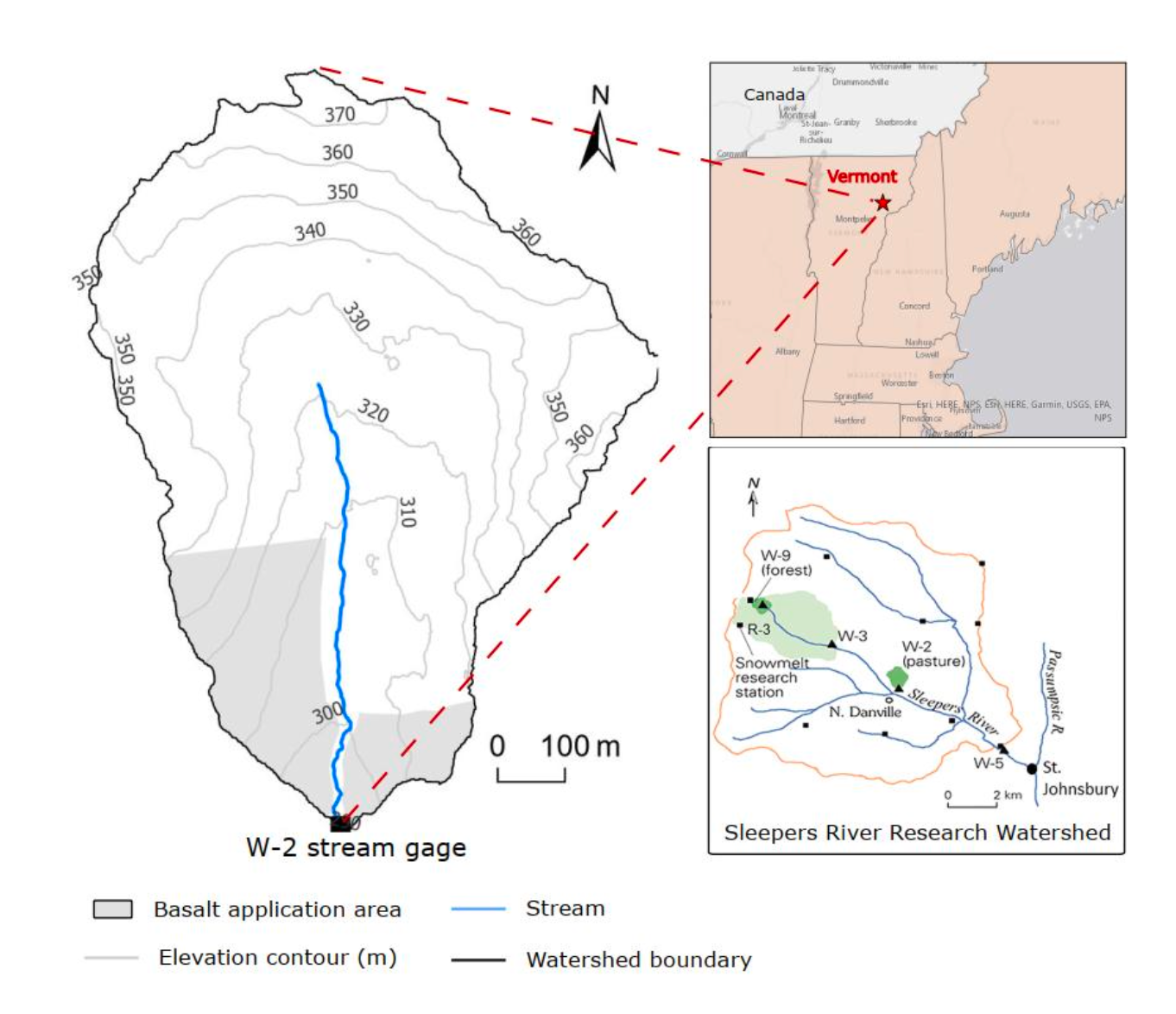
The study site is Watershed 2 (W-2), a 59-hectare headwater catchment within the Sleepers River Research Watershed in Danville, Vermont. Sleepers River has hosted continuous hydrological research since 1959, which means the Yale team inherited decades of streamwater chemistry records and soil characterization before they applied a single grain of basalt. Few ERW studies anywhere in the world have this kind of baseline to work with.
The landscape itself is modest: low hills between 285 and 377 meters in elevation, 73% hayfield and pasture, the rest forest. Dairy cattle graze the lower fields from May through October. Beneath the topsoil lies calcareous glacial till from the Wisconsinan glaciation, underlain by the quartz-mica schist of theWaits River Formation. The feedstock, a calcium-rich meta-basalt from the Holyoke Range in Massachusetts supplied by Rock Dust Local, was applied at 20 tonnes per hectare to 8.9 hectares of the catchment’s southern portion, roughly 15% of the total watershed area. A nearby forested catchment (W-9) served as an untreated reference.
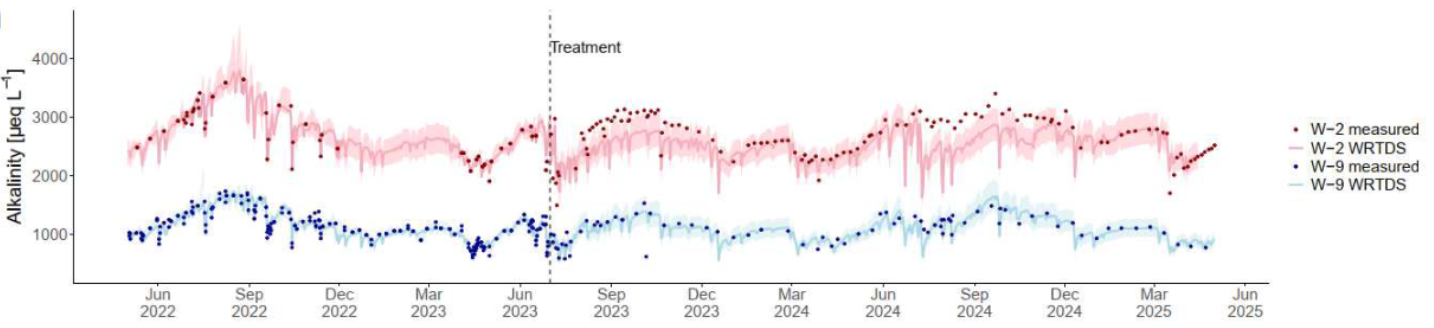
The streamwater responded within a month. From July through November 2023, alkalinity and calcium concentrations in the W-2 stream rose well above what statistical models predicted for a no-basalt scenario. The peak came in September, when measured alkalinity exceeded the counterfactual by more than 550 microequivalents per liter. Calcium showed a parallel spike. The reference watershed showed none of these changes.
Sun et al. confirmed the signal came from basalt weathering through multiple independent lines of evidence. Elemental ratios of calcium, bicarbonate, and magnesium (each normalized to sodium) shifted toward silicate-weathering endmembers, away from the carbonate signature that had historically dominated the stream. Silicon and lithium concentrations rose in lockstep with alkalinity. The lithium isotope ratio dropped within three months, consistent with isotopically lighter lithium from basalt dissolution. Rubidium, which substitutes for potassium in basalt minerals, also increased at equivalent discharge levels. The convergence of so many independent tracers pointing in the same direction is what makes the attribution convincing any single line of evidence could be questioned, but together they leave little room for alternative explanations.
When It Works and When It Doesn’t
The ERW signal was not constant. It followed a recurring seasonal rhythm across both post-application years.
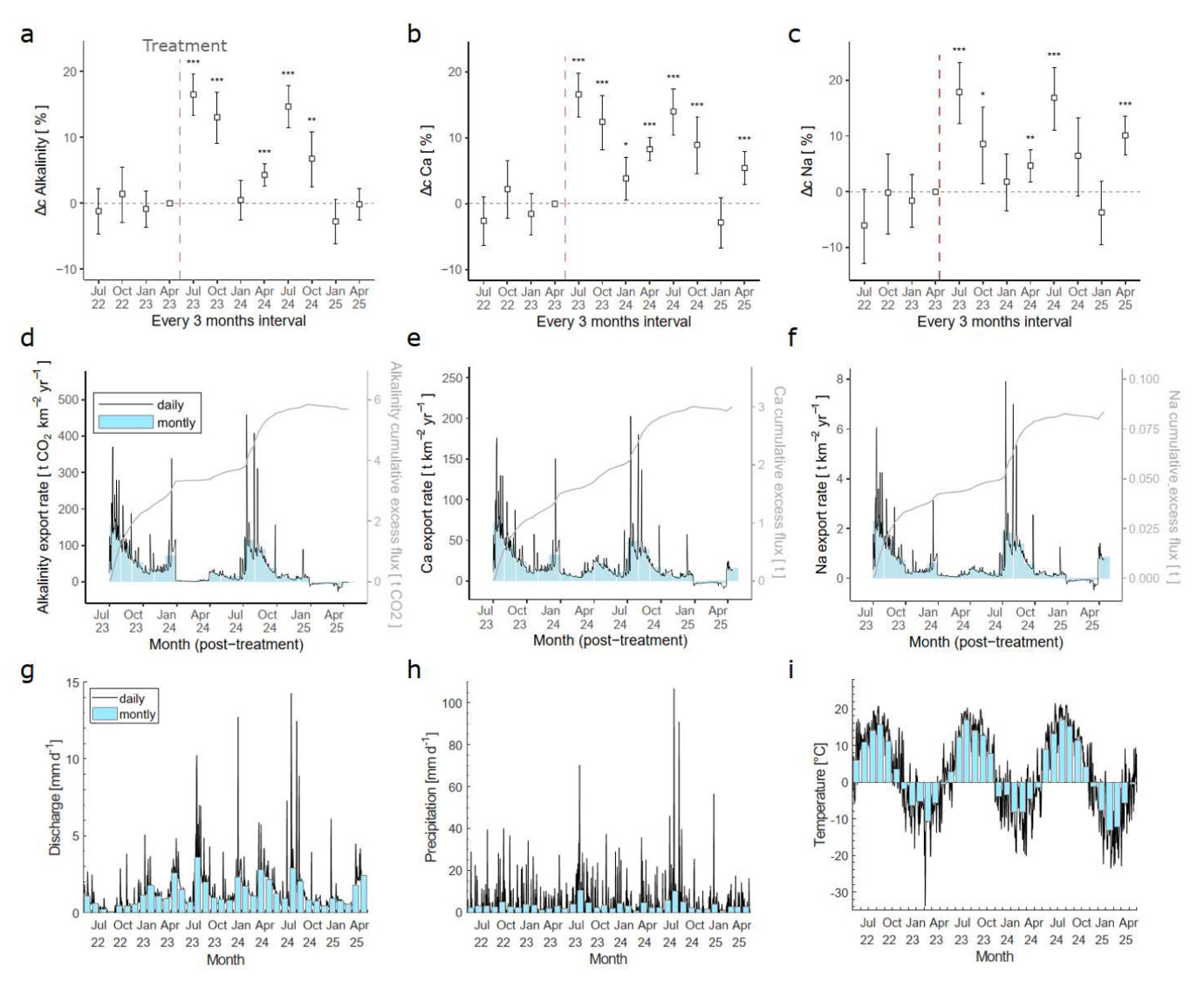
Using a Generalized Additive Model coupled with a Difference-in-Differences framework, Sun et al. estimated that ERW contributed 14 to 18% of observed streamwater alkalinity during July through September. As temperatures dropped and discharge shifted toward snowmelt in winter and spring, the contribution became weak or undetectable. This pattern repeated in the second year with comparable intensity, suggesting that climate and hydrology exert a stronger control on the weathering signal than processes intrinsic to the feedstock itself, at least at the timescale of two years.
The mechanism lies in how water moves through the catchment. The team distinguished two flow pathways: slow flow (deeper groundwater with long residence times) and quick flow (near-surface water that reaches the stream faster). The basalt signal appeared almost entirely in quick flow. During summer and fall, quick-flow alkalinity rose by up to 1,200 microequivalents per liter relative to pre-treatment levels, while slow-flow concentrations remained unchanged year-round. The basalt sits at the surface, so shallow soil water that contacts the feedstock between storms picks up weathering products and delivers them to the stream during rainfall events. Deeper groundwater, traveling longer subsurface paths, has not yet carried a detectable signal.
Isotope analysis showed that 77% of streamflow at W-2 is older than about two months, meaning most water resides in longer-term storage. The observed signals therefore represent the leading edge of what may be a longer, more distributed response. Temperature reinforces the seasonal pattern as well: silicate dissolution rates increase exponentially with warming, and soil CO₂ rises in summer as roots and microbes respire more intensely. For ERW deployment planning, this means temperate continental climates will likely deliver carbon removal in seasonal pulses.
Carbon Removal
Over 22 months, the watershed exported ERW-derived alkalinity equivalent to 63.8 tonnes of CO₂ per square kilometer from the treated area, or 9.5 to 11% of the basalt’s theoretical maximum carbon removal potential. The annualized rate averaged 34.72 tonnes of CO₂ per square kilometer per year, among the highest reported in any study that quantifies CDR through changes in stream alkalinity. As the authors write:
“This work demonstrates rapid, seasonal watershed responses to ERW and its promise for CDR monitoring, reporting, and verification (MRV), and highlights how climate and hydrological variability set fundamental boundaries on ERW effectiveness across landscapes.”
One reason for this relatively efficient export is that the soils in W-2 already had high base saturation, roughly 85% calcium on exchange sites. When basalt-derived cations enter a soil whose exchange complex is already near saturated, fewer are retained by sorption and more pass through to drainage. In more acidic soils with low base saturation, cation exchange can delay the alkalinity signal for years. This is worth keeping in mind: the same soil property that made Sleepers River a strong site for detecting stream signals also means the soil itself had less room to benefit from the added minerals. That tension between carbon export efficiency and agronomic impact runs through the companion study as well.
What Happened in the Soil
Soil science sometimes gets overshadowed in ERW discussions by the carbon accounting, but for farmers considering whether to spread rock dust on their fields, what happens in the top 15 centimeters of soil matters more than what leaves the watershed in dissolved form.
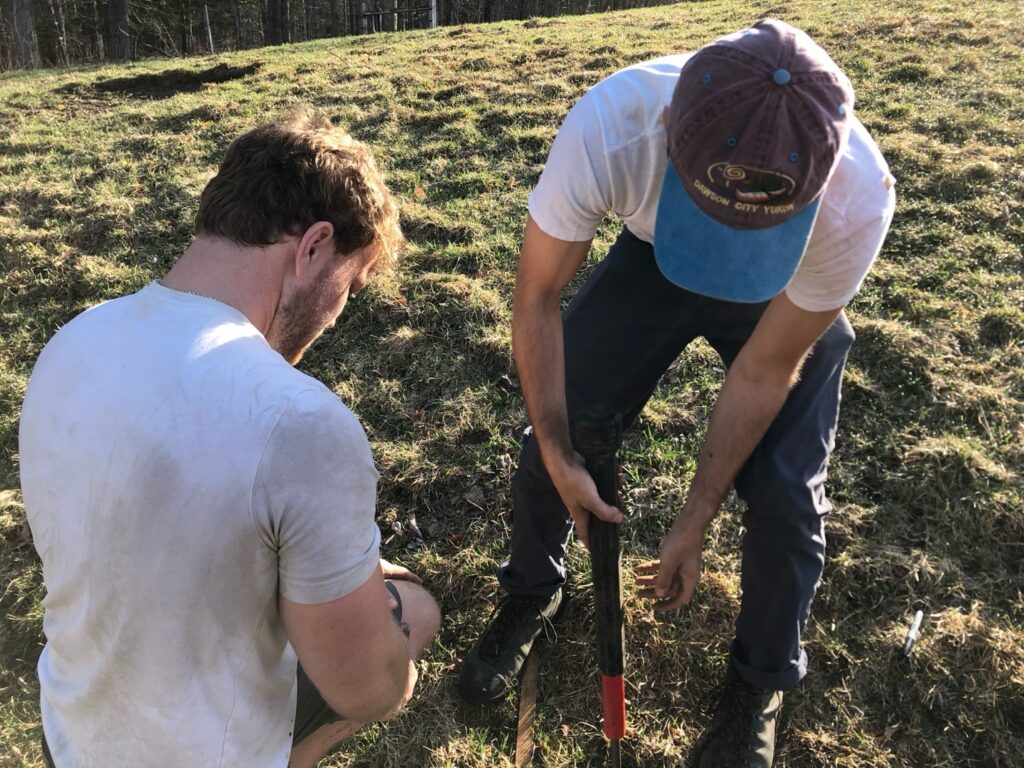
Zacharias et al. tracked topsoil chemistry at 64 plots for 13 months after application. Their sampling design spanned a hillslope catena, from pasture toe slopes near the stream up through foot slopes, across a fence line into hayfield shoulder and summit positions, capturing gradients in acidity, nutrients, and land use that exist within a single small watershed.
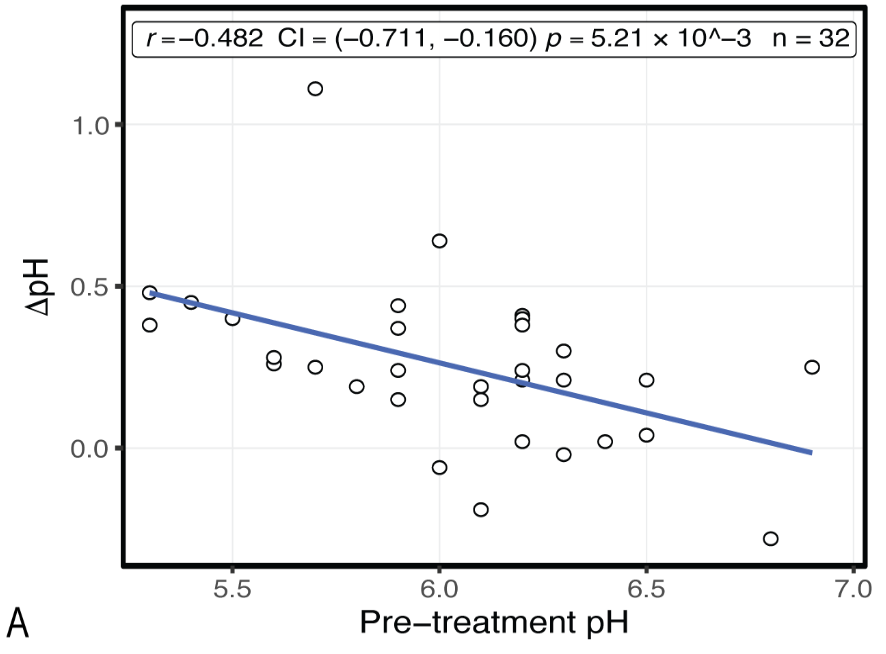
The clearest response was in pH. Basalt raised soil pH by 0.15 to 0.24 units, with the largest gains where soils were initially most acidic. Pasture foot slopes, which had the lowest baseline pH (median 5.6), showed a significant 0.24-unit increase by fall 2024. Hayfield shoulder slopes gained 0.16 to 0.21 units. The hayfield summit, starting near pH 6.4, barely changed. This inverse relationship between initial acidity and the magnitude of response was strong and consistent throughout the study, the soils that needed the most help responded the most.
Exchangeable calcium increased by up to 12% at the hayfield shoulder, where the pH response was also strongest. Other nutrients told a quieter story. Magnesium and potassium showed inconsistent or negligible shifts, likely because these elements are locked in metamorphic minerals like actinolite, chlorite, and sericite that dissolve more slowly than the primary igneous phases. This is a consequence of the specific feedstock used: the Pioneer Valley meta-basalt has undergone partial metamorphism, converting roughly a quarter of its original igneous minerals into more resistant alteration products.
Zacharias et al. conclude that at this application rate, calcium-rich meta-basalt functions primarily as a slow-release liming agent in well-buffered temperate soils:
“The amendment should be viewed primarily as an alternative liming material rather than a multi-nutrient fertilizer in well-buffered temperate soils, since other key nutrients showed negligible or minor changes.”
The picture in tropical systems is different. At similar application rates, basalt can substantially raise exchangeable potassium and phosphorus in addition to pH, because deeply weathered tropical soils have far greater nutrient deficits and lower buffering capacity. The distinction matters for how ERW is communicated to farmers: in the temperate northeastern United States, the value proposition centers on liming; in the tropics, it extends to broader nutrient restoration.
An Unexpected Effect in the Riparian Zone
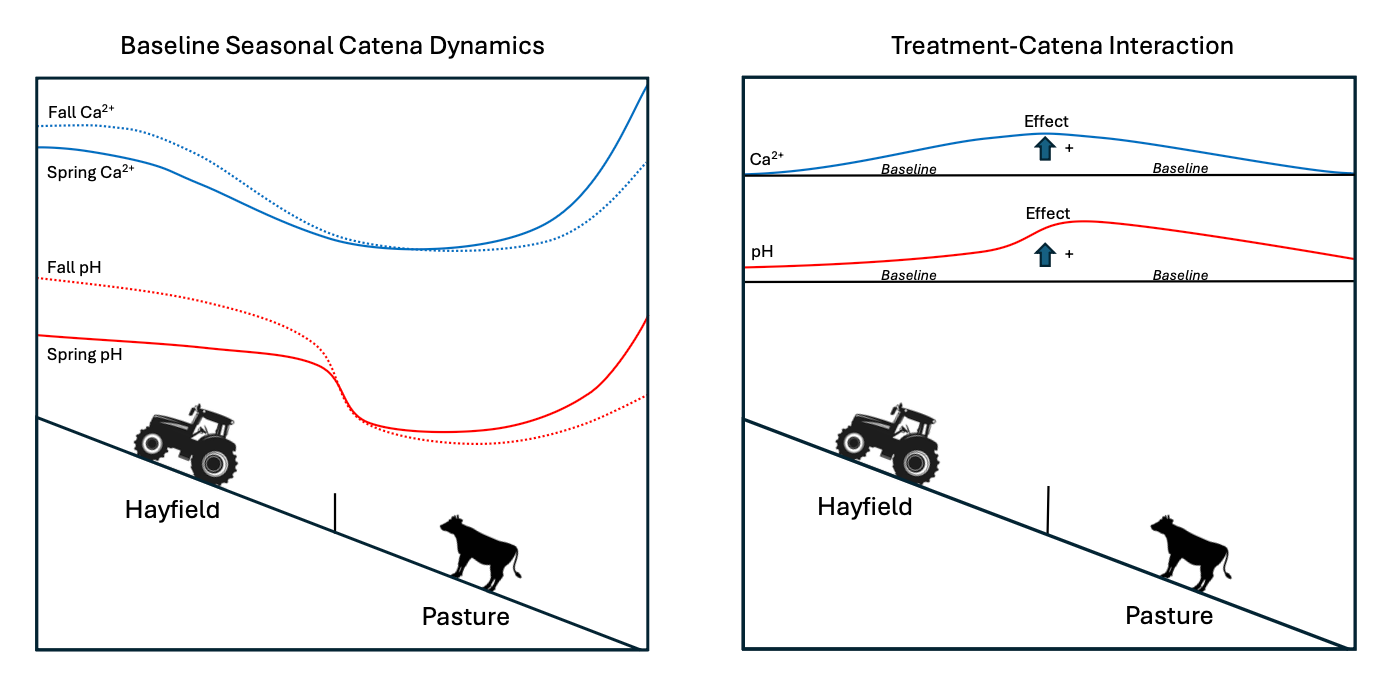
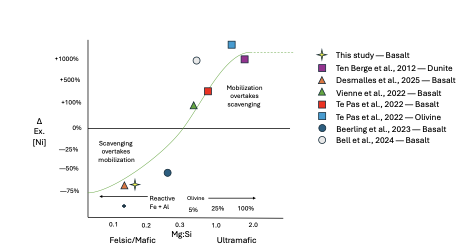
The carbon story is what first makes Sleepers River notable. However, in a companion preprint on Zacharias et al. (2026),“Evaluating trace-metal responses to field deployment of enhanced rock weathering across agricultural and riparian soils”, Zacharias and colleagues report that the same basalt application did not increase extractable metals in the treated fields and, downslope, was associated with 60 to 80% declines in extractable nickel, aluminum, and lead in riparian soils. Those declines occurred where calcium-rich weathering products accumulated and Ca:Al ratios rose, in other words, where the watershed’s buffering signal was strongest.
That matters because enhanced weathering is usually discussed in terms of carbon accounting or agronomic co-benefits. Here, the watershed also behaved like a reactive filter. The same alkalinity generation and base-cation delivery that matter for carbon removal also shifted soil chemical conditions in ways that made several cationic metals less labile. Rather than being a side effect, metal attenuation appears to be part of the broader soil–water response.
The figure also helps explain why not all rock dusts behave the same way. Feedstocks richer in reactive iron and aluminum tend to promote scavenging and secondary mineral formation; ultramafic, olivine-rich materials can do the opposite, particularly for nickel. That distinction is crucial if enhanced weathering is ever to be designed deliberately rather than discussed as a generic category.
From Watershed Signal to Remediation Practice
That is exactly the argument advanced in a new Zacharias (2026) preprint, “Repurposing enhanced rock weathering for brownfield cleanup: a practical carbonate–silicate remineralization method for stabilizing cationic metals in shallow soils”. The paper takes the Sleepers River results seriously as evidence of a controllable geochemical system: one that can be guided through feedstock choice, carbonate–silicate blending, shallow placement, and verification with pH, Ca:Al, TCLP, and SPLP.
In that framing, the watershed experiment becomes more than proof that rock dust can capture carbon in real landscapes. It becomes a template for how remineralization might be used to stabilize metals in place on brownfields, mining-impacted soils, and other shallow contaminated sites, especially where excavation is costly or disruptive. The unexpected lesson from Sleepers River is that some of the most important chemistry happens along the way, in the soils and receiving zones where weathering products accumulate.
Looking Ahead
The seasonal predictability of the stream signal has practical implications for monitoring. If summer and fall account for most alkalinity export while winter produces virtually none, sampling strategies can be concentrated in the warm months at lower cost. The watershed framework itself offers a scalable approach to CDR verification: a single stream gauge paired with a reference catchment and baseline data can integrate heterogeneity of real landscapes into one export number. But Sleepers River also suggests that near-stream receiving zones deserve more attention, because that is where buffering, retention, and reduction in metal lability may become most apparent. Meanwhile, Zacharias et al. point out that routine agronomic soil tests – the kind farmers already collect for lime and fertilizer recommendations – can detect basalt weathering effects. If pH and exchangeable calcium can simultaneously guide farm management and verify weathering progress, monitoring costs drop and farmer buy-in becomes more natural.
The two-year window of these studies, while long by ERW field-trial standards, cannot resolve everything. The majority of streamflow at W-2 has not yet expressed an ERW signal through deeper flow paths, and weathering rates may decline as the feedstock ages and reactive surface area is consumed. Management-induced heterogeneity in the pasture, including patchy manure deposition and compaction from grazing, inflated variability in ways that may have masked some treatment effects. These are familiar challenges for anyone doing field science on working farms, and they argue for larger sample sizes and stratified sampling in future deployments.
What the Sleepers River experiment does provide is something the ERW field has lacked: watershed-scale and statistically rigorous evidence that basalt weathering delivers quantifiable carbon removal in a temperate agricultural setting, and that the same soil-water system can produce other useful outcomes along the way. The carbon captured by rock dust travels with water, but some of the most interesting chemistry changes the soil first without leaving the watershed. Learning to read both signals, export and retention, carbon removal, and metal stabilization, may be the real work that lies ahead.
Qi Zheng is an undergraduate student in Environmental Policy and Sustainable Development with Economics at the London School of Economics and Political Science. She is interested in climate policy, soil carbon sequestration, and sustainable land management, and is also exploring the intersections of environmental governance and economic development.
Support us on Patreon
Thank you for joining us today! Please become a member of RTE and support us on Patreon. Unlike many larger organizations, we work with a team of determined and passionate volunteers to get our message out. We aim to continue to increase the awareness of remineralization to initiate projects across the globe that remineralize soils, grow nutrient dense food, regenerate our forests’ and stabilize the climate – with your help! If you can, please support us on a monthly basis from just $2, rest assured that you are making a big impact every single month in support of our mission. Thank you!


Got something to say?